
STANWAY HOUSE
I recently visited Stanway House where we shot some beautiful footage for our homepage and social media content and I’d love to tell you a little more about it, because this very special piece of British heritage moved me in quite a profound way.
I came to learn about the house and wider estate through a fellow designer and when I explored further, it became clear that Stanway would exemplify everything that I hope to convey through Oliver Thornton Home; timeless elegance, authentic craftsmanship, and a cinematic, fantastical quality that makes you feel as though you’ve stepped into a storybook world.
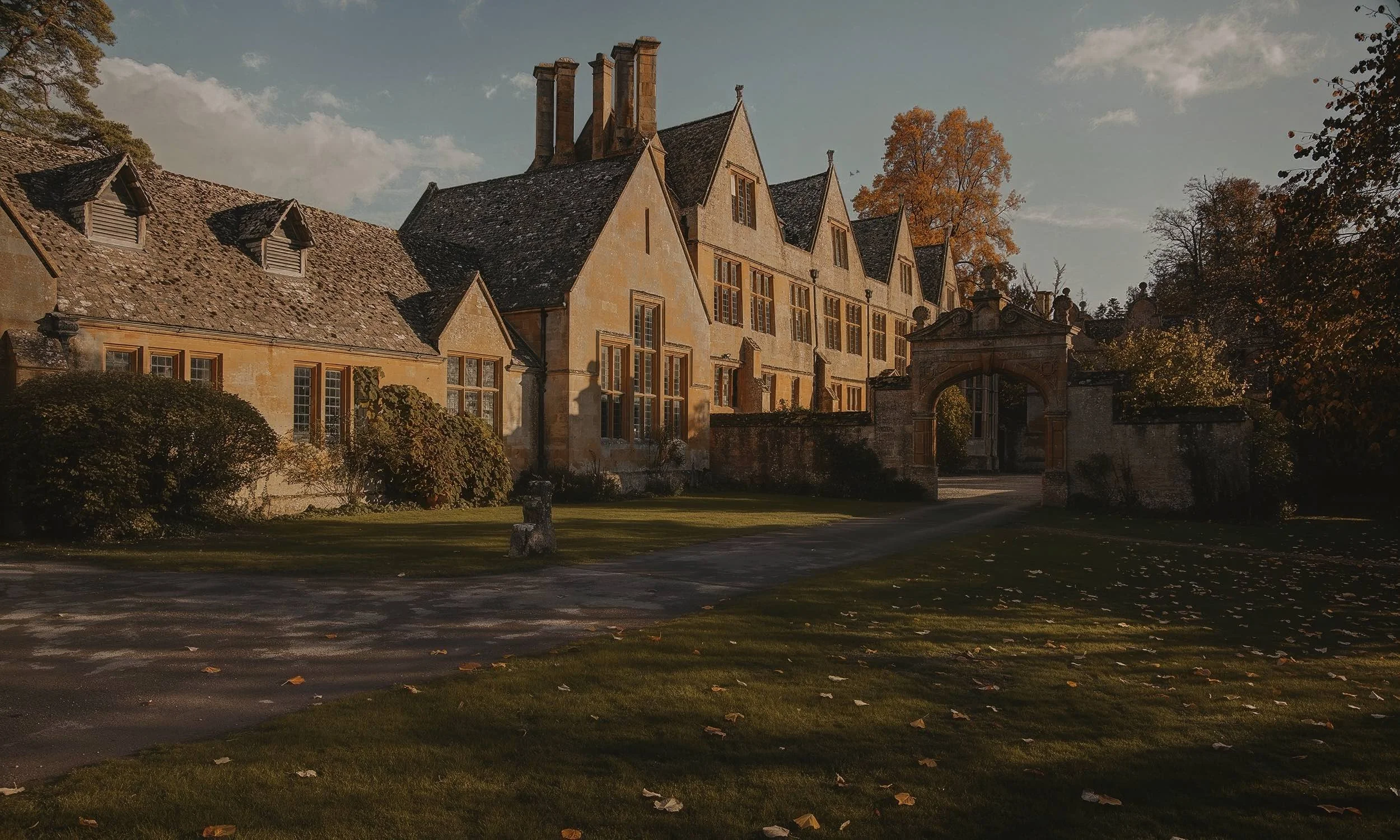
Stanway House is a Jacobean manor house near the village of Stanway in Gloucestershire, originally owned by Tewkesbury Abbey for 800 years, then for 500 years by the Tracy family and their descendants, the Earls of Wemyss and March. The current Earl recounted his understanding of the history of the property during a 2016 interview with the publication Cotswold Homes, as follows:
The estate goes back to 715, we think. It was given to Tewkesbury Abbey by Odo and Dodo, two Saxons who lived in the Winchcombe area. Then in 1533 it was leased to Richard Tracy. Richard had a bee in his bonnet about the fact his father was declared to be a heretic after he was already dead, his body being dug up and burnt. So he became friendly with Thomas Cromwell, who was leading an anti-monastic campaign at the time. Cromwell – who was so powerful at that point - suggested the abbey lease the land to Richard and it was done within four days of Cromwell writing the letter.
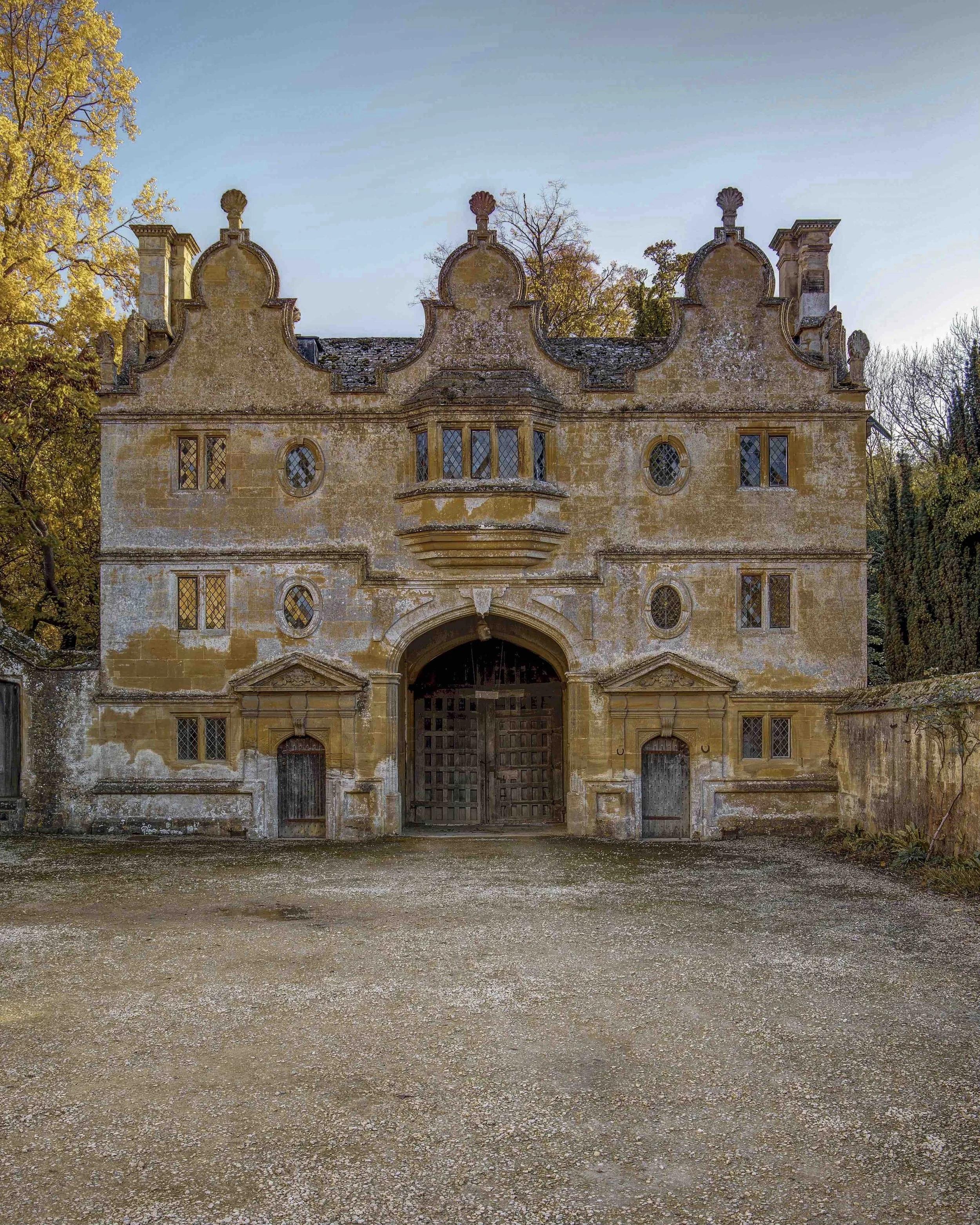
Records from 1291 indicate that the estate had three corn mills and a fulling mill used for processing wool from the many sheep owned by the abbey. The latter was converted in the late 17th century to grind corn and is now the Stanway Watermill. Another source states that the work on the house began around 1580 on the ruins of an earlier Tudor house, with construction commissioned by Paul Tracy, Richard Tracy's son. The triple-gabled Jacobean gateway was created by Paul's son, Sir Richard Tracy, in 1630.
As well as the magnificent house, Stanway is also known for its impressive fountain, which was opened on 5 June 2004. The Long Canal was filled in around 1850 but was restored in the early 2000s, a necessary step to creating the current fountain, which was not an original feature of the estate. The single-jet fountain, which rises to over 300 feet (91 m), is the tallest fountain in Britain, and the second-tallest fountain in Europe.
Close by is the local cricket pitch, with a thatched pavilion, which was paid for by the creator of Peter Pan, J.M. Barrie. After the First World War, Barrie, who loved cricket, was a regular guest at Stanway House and even founded an amateur cricket team, the Allahakbarries, for his friends. Among the sometimes players were Arthur Conan Doyle, H.G. Wells, Jerome K. Jerome, G. K. Chesterton, A. A. Milne, and P. G. Wodehouse.
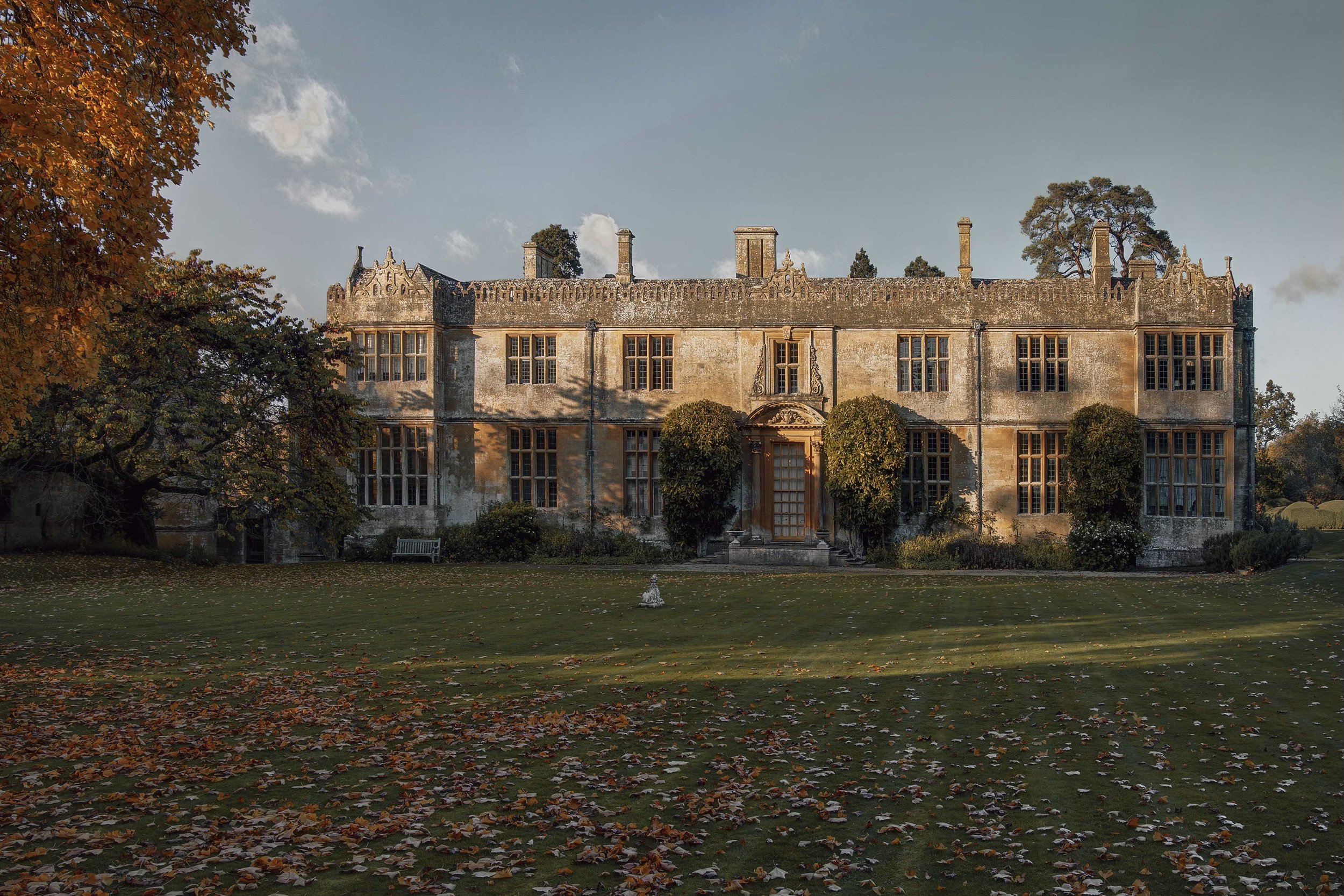
The house and grounds are open to the public on a limited basis each summer, with availability for weddings and events. I really couldn’t think of a more beautiful place to wed. We spent a perfect autumnal day there and it was nothing short of picture postcard perfect. The buildings, from manor house, to worker’s cottages and mills, interact with each other in a deeply romantic and whimsical kind of a way, as if it was built with equal parts architectural prowess and child-like enchantment. As we explored the property and planned the day, the mullioned windows were gleaming like faucets of old gemstones and the local guiting stone glowed a honey amber in the low autumn sun. Repeatedly and quite involuntarily. I found myself turning to my colleague, Robin, with my jaw wide open in awe.
Country houses affect me in different ways and vary greatly from house to house, some are stern and powerful, others grand and fanciful, but I would say the overriding feeling when visiting Stanway was one of astonishment. Astonishment that human hands could shape something so pleasing, so very beautiful. So gracious and open hearted, as if the passing nature of wonder had been caught and crafted. In the enduring folly of humankind, we so often get it wrong, but every so often we manage to get something surprisingly, redeemingly right, and I am thankful to witness it in person when we do.
Visit www.stanwayfountain.co.uk for more information