
THE HISTORY OF BRITISH INTERIORS
HAVE YOU EVER WONDERED WHAT DEFINES A BRITISH INTERIOR,
or what the visual characteristics of British style are? The answer is in a story shaped by history; trade, monarchy, empire, craftsmanship and industry. The wingback chair has a reason for being, the chintz, a backstory. Once you start tracing the threads back through history, you realise that British style isn’t just decorative, it’s built on centuries of influence.
During the Tudor, Georgian and Victorian eras the British Country House emerged as a defining symbol of wealth, land and lineage, and from it, our national interior design identity was shaped. From Tudor manor houses built to demonstrate royal favour and rising wealth, to the symmetry of Georgian estates and the layered richness of Victorian residences, the Country House became a visual language of heritage, permanence and cultivated taste. Even today, modern British interiors borrow from their architectural detailing, their sense of proportion and their layered storytelling. Oliver Thornton Home is a reimagining of that heritage, drawing from the origins of these houses and the decorative traditions they established.
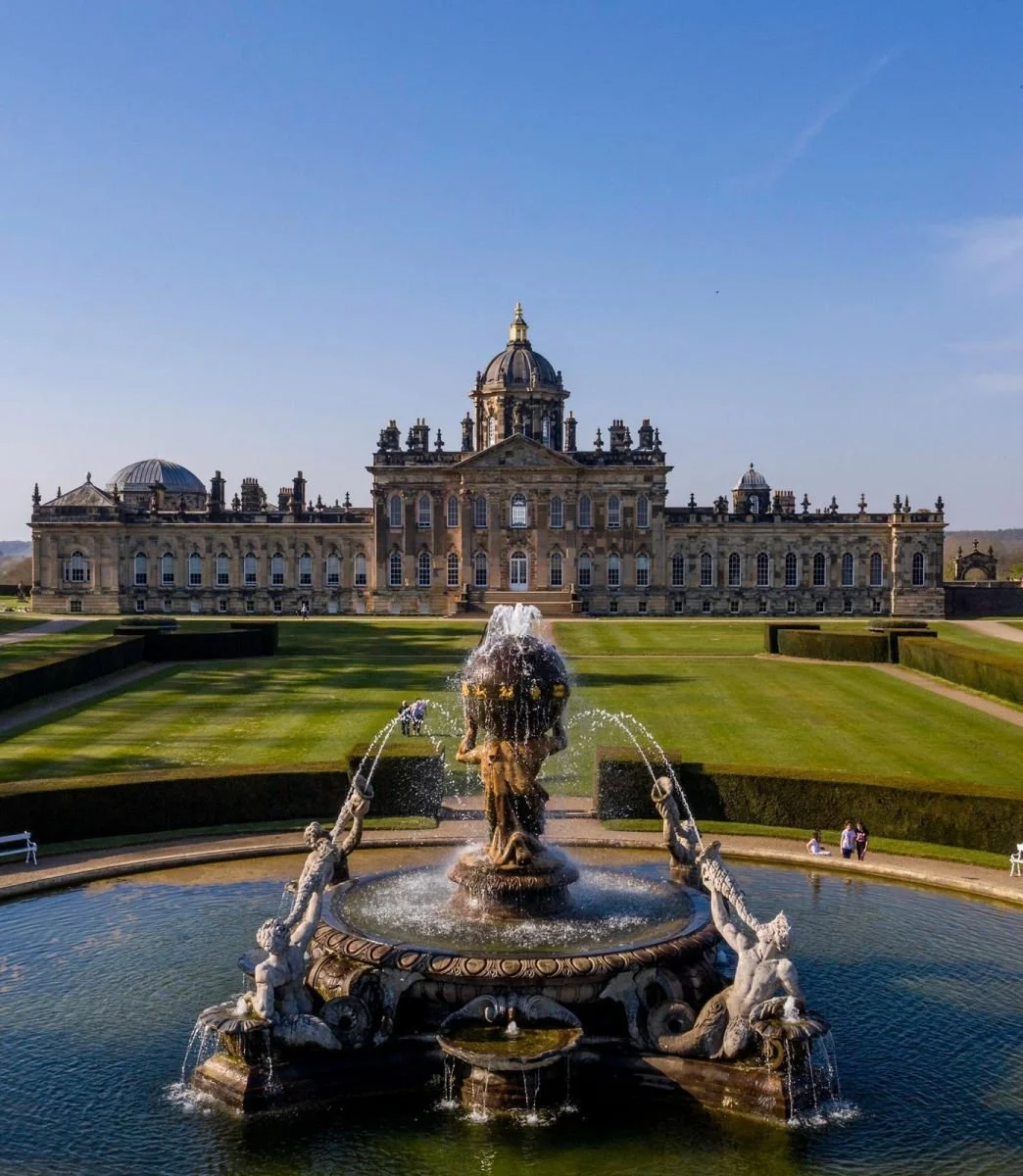
Castle Howard, Unknown
PART ONE
TUDOR, GEORGIAN & VICTORIAN FOUNDATIONS (1485–1901)
The Tudor period (1485–1603): prosperity, power and architectural grandeur
The Georgian period (1714–1830): symmetry, classical influence and refined elegance
The Victorian period (1837–1901): industrial growth, global influence and decorative layering
FIVE DEISGN ELEMENTS FROM THESE PERIODS THAT YOU WILL SEE IN YOUR HOME TODAY
Wall panelling and architectural detailing
Symmetry in room layouts and furniture placement
Heritage fabrics
Botanical and classical motifs in wallpaper and décor
Layered, collected interiors that mix texture, pattern and history
THE TUDOR ERA
Under the reign of the Tudor dynasty, Britain experienced expanding trade and increasing prosperity. Wealth was no longer confined solely to hereditary aristocracy, successful merchants and royal favourites were rising in status. Land bestowed by the monarchy became both the symbol and substance of power. With land came the construction of large manor houses, and with those houses came interiors designed to demonstrate permanence, authority and wealth.
Tudor interiors were unapologetically weighty. Dark oak panelling enveloped walls, its richness deepened by candlelight. Ceilings were crossed with heavy beams, reinforcing a sense of architectural solidity. Rooms were dressed in richly coloured velvets and damasks, deep reds, forest greens, burnished golds and warm browns, their saturation speaking to the prosperity of the age.
The great four-poster bed, heavily carved and draped in fabric, stood not only as furniture but as a statement of status. Windows were divided into latticework casements, often filled with stained glass that filtered light into jewel-toned fragments. Walls were hung with tapestries, both insulating and decorative, depicting scenes of mythology or lineage; reminders of heritage and legitimacy.
The Tudor interior was was immersive, textured and atmospheric, a language of solidity and strength.
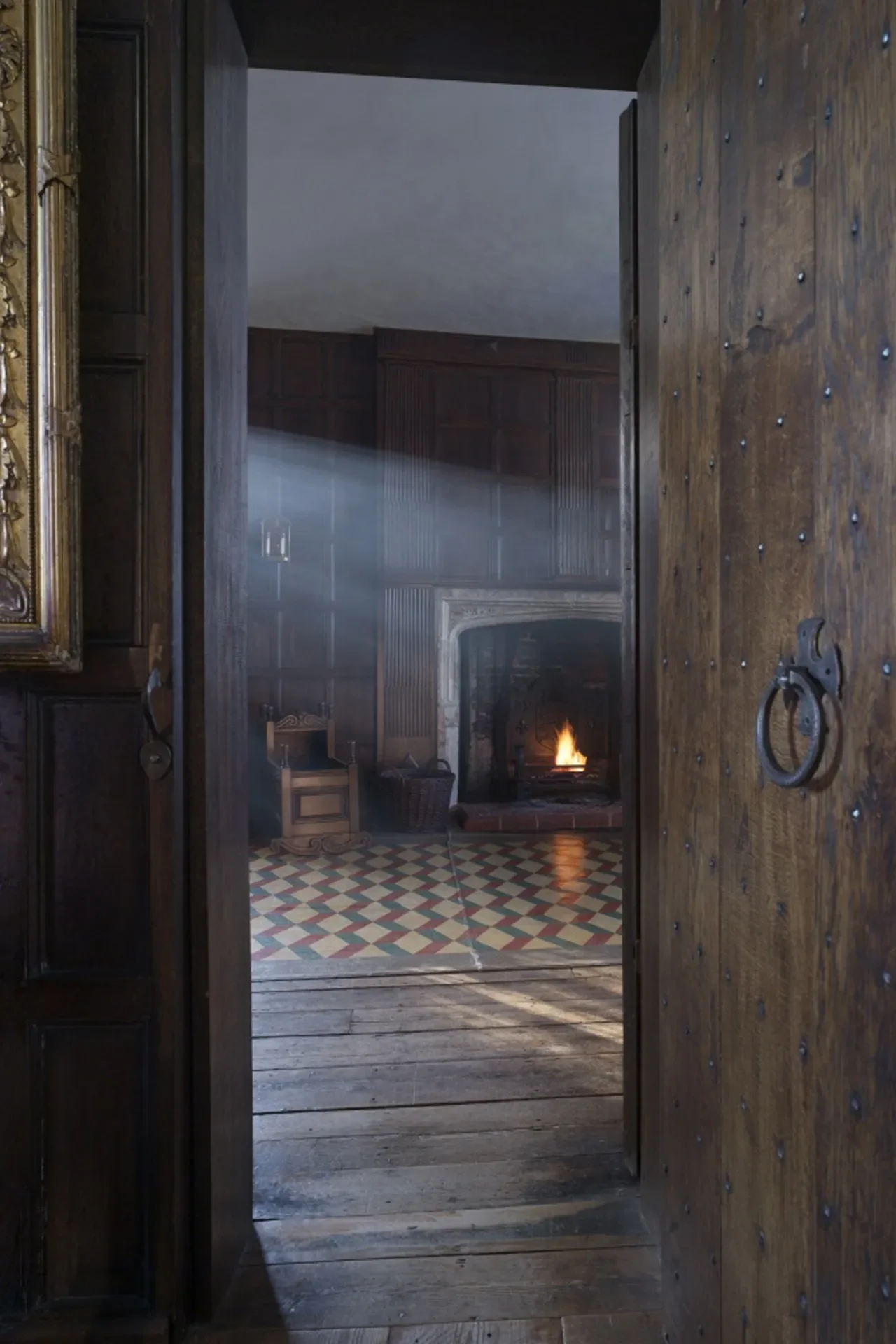
Sutton House, National Trust Images, Dennis Gilbert
THE GEORGIAN PERIOD
By the time of the House of Hanover, a different sensibility emerged. Britain was increasingly confident, outward-looking and intellectually engaged with Europe. Young noblemen embarked on the Grand Tour, returning from Italy and Greece with art, sculpture and a reverence for classical antiquity. Interiors became lighter, not only in palette, but in spirit.
The heavy grandeur of the Tudor age gave way to proportion and symmetry. Influenced by the architectural principles of Andrea Palladio, Georgian rooms were carefully balanced compositions. Walls were often articulated with niches and alcoves, framing classical busts or urns. Architectural detailing echoed Roman and Greek precedents: columns, pediments and precise cornicing.
Decorative motifs became refined and rhythmic; swags, ribbons and garlands draped gracefully across plasterwork. Colour palettes softened dramatically. Pale greens, delicate pinks and muted mauves replaced the saturated Tudor tones, allowing light to move more freely through interiors.
There was restraint here, but not austerity. The Georgian interior celebrated taste, education and cultural awareness. It was elegance informed by travel and scholarship.
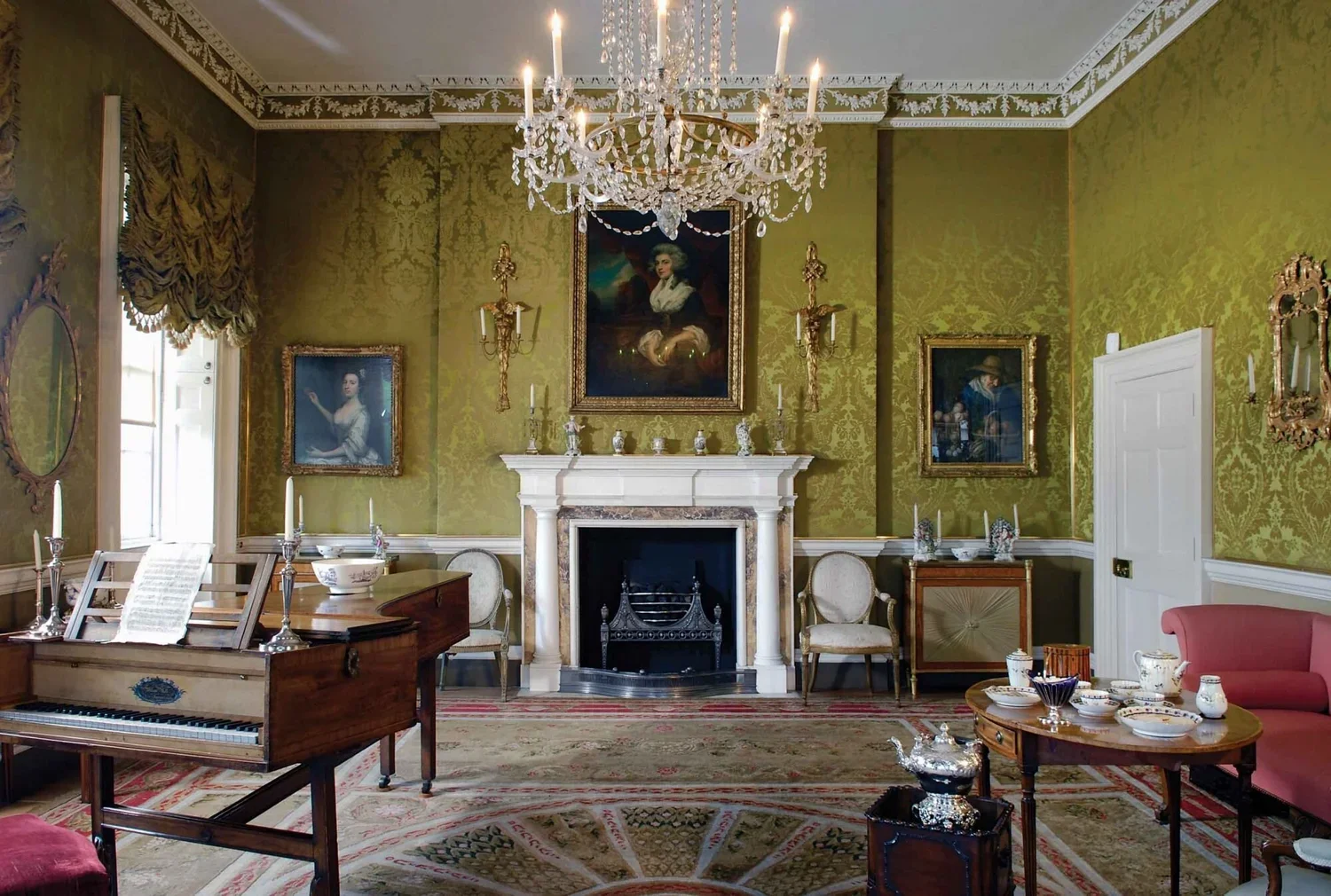
1 Royal Crescent, Bath - An Original Georgian Withdrawing Room C. 1767 - 1774 to the designs of the Architect John Wood the Younger via WOOLF Interior Architecture & Design
THE VICTORIAN PERIOD
The reign of Queen Victoria ushered in a period of dramatic expansion. The British Empire stretched across continents, and global trade flooded the country with new materials, patterns and influences. At the same time, industrialisation introduced mass production, making decoration more accessible than ever before.
Victorian interiors reflected this duality: global eclecticism and industrial capability. Rooms were layered, expressive and unapologetically ornate. Gothic Revival and medieval references re-emerged, seen in pointed arches and heavily carved furniture. Upholstery became generous and indulgent; button-back armchairs, overstuffed sofas and richly coloured velvets in ruby red, forest green and deep navy enveloped the sitter.
Wallpaper, now mass produced, covered walls in dense botanical or damask patterns. Patterned floor tiles created bold entrances, while marble fireplaces became increasingly elaborate. Window treatments were sumptuous, often layered with tassels and heavy drapery that framed tall sash windows.
Yet within this ornamentation emerged a resistance. The Arts and Crafts movement, led by William Morris, pushed back against industrial excess, advocating for craftsmanship and integrity of materials, a philosophy that would ripple through British design long after the era ended.
The Victorian interior was confident, layered and expressive; a culmination of empire, industry and identity.
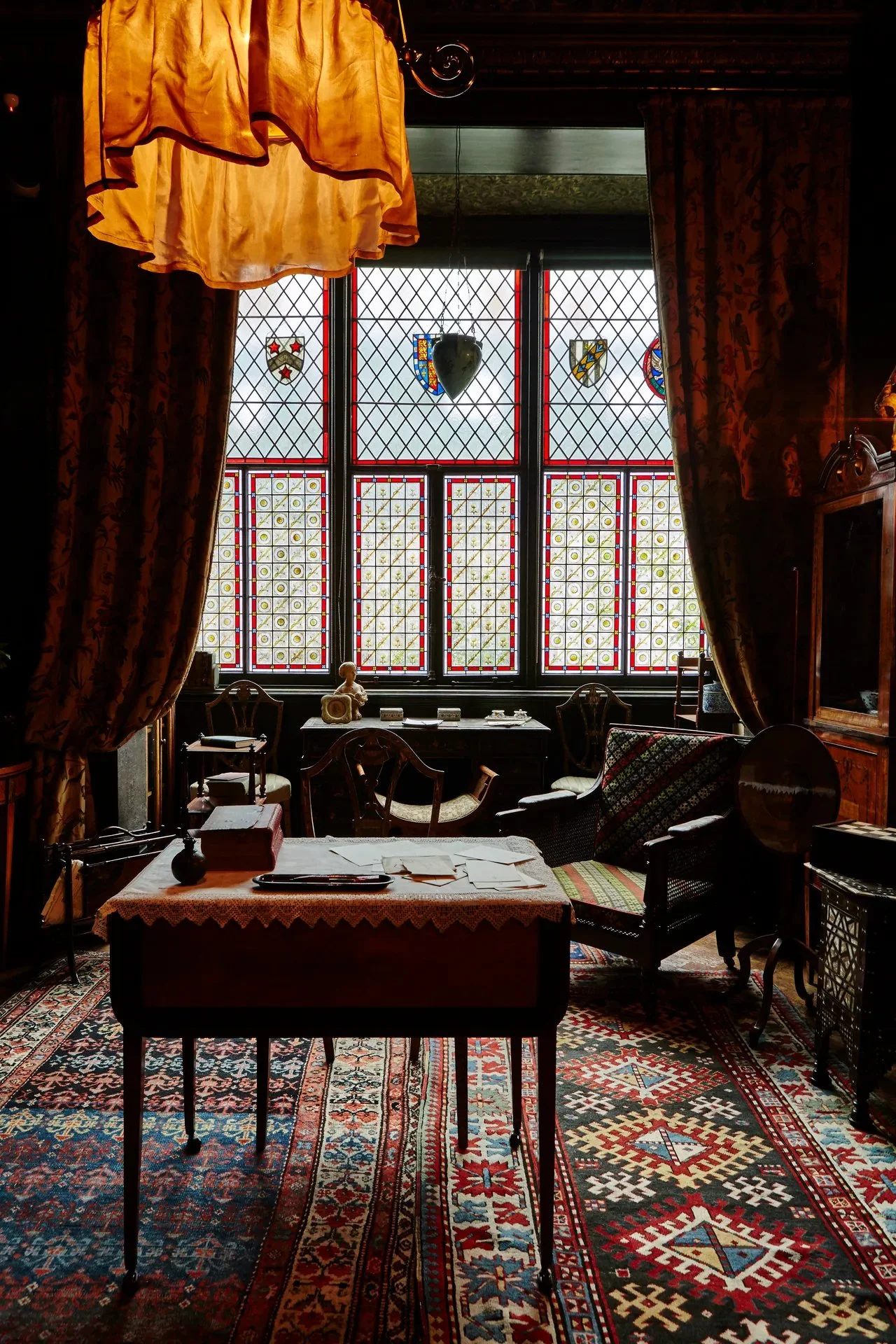
Sambourne House, With permission from Leighton Sambourne Museum. Photographer:Leonardo Tommasin
The influence of Tudor, Georgian and Victorian design is not confined to historic houses or stately homes, it can live in the everyday design choices we make within our homes today. Upholstering a clean-lined, contemporary chair in a heritage damask or velvet, allowing centuries of textile tradition to sit comfortably within a modern silhouette. Taking a bold, exaggerated print, something that would have felt perfectly at home in the Victorian era, and embracing it in a small bathroom or boot room, where its confidence feels intentional rather than overwhelming. Oak panelling, once a symbol of Tudor prosperity, can lend a new-build home a sense of permanence and integrity or if you’re lucky enough to have the real thing, pairing it with contemporary furniture to create a satisfying tension.
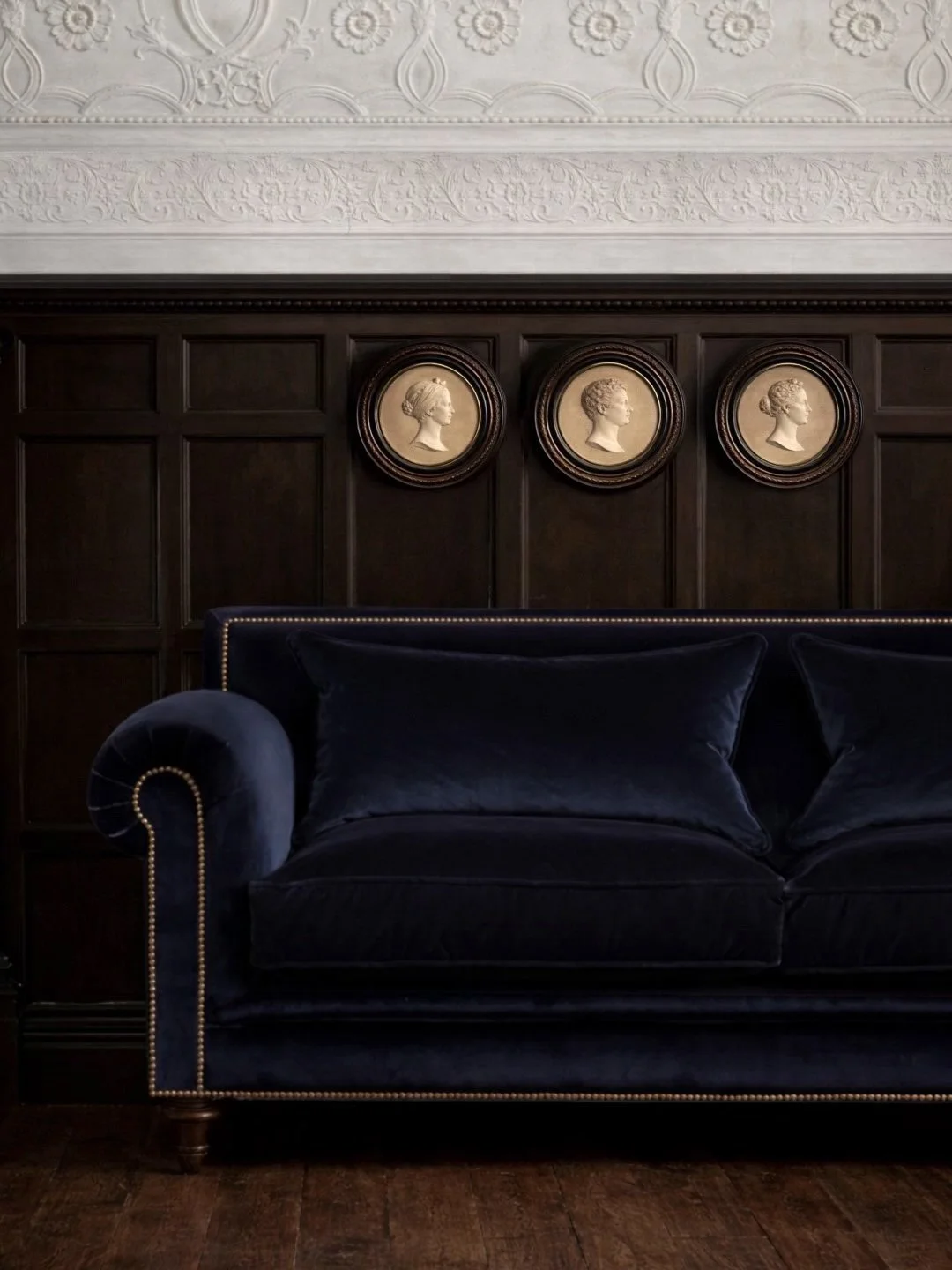
The Haddleigh Sofa from Oliver Thornton Home sits within an Oak panelled Room
The Georgian devotion to proportion and symmetry still guides how we balance furniture, lighting and architectural details within open-plan spaces. And perhaps most importantly, the spirit of craftsmanship, so central to these eras , continues through today’s upholsterers, joiners, woodworkers and furniture makers, whose skills ensure that British interiors remain thoughtful, tactile and enduring. The past is not something we replicate, it is something we reinterpret, giving modern homes depth, character and a story worth telling.
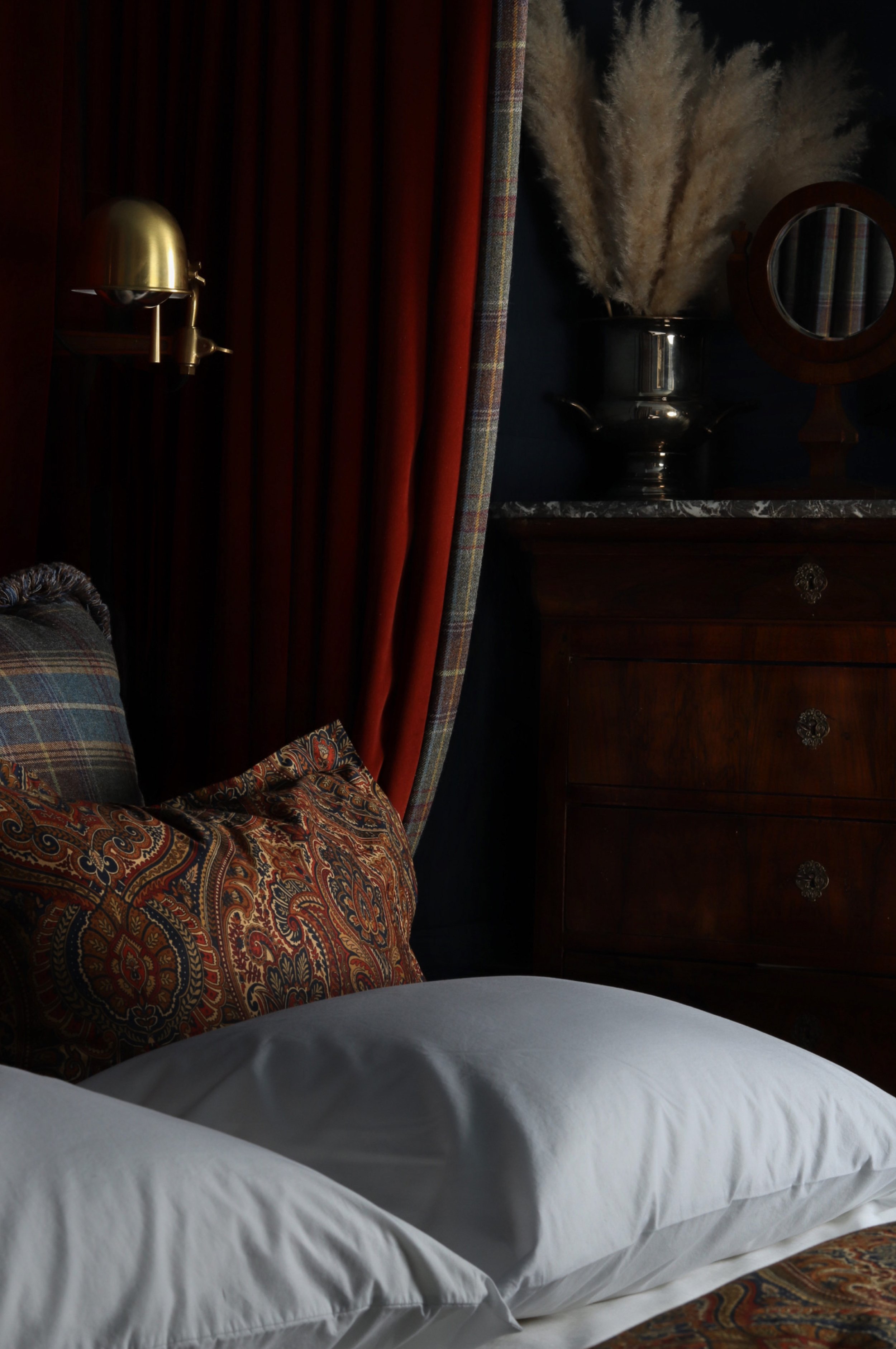
Design by Oliver Thornton Home