
YOUR INTERIOR DESIGN QUESTIONS ANSWERED - PART ONE
AFTER PUTTING A CALL OUT FOR YOUR QUESTIONS ON OUR INSTAGRAM PAGE,
I received so many that I decided to dedicate an entire post to answering them properly. I’ve taken the most common themes and grouped them into singular questions, creating answers which reflect what many of you were asking. Alongside that, I’ve also included a few specific questions which really stood out. The result is a mix of shared curiosities and individual queries.
I will answer your questions about my career, my founder story and my life, in a separate post over the following weeks, along with part two and three of this post.
INTERIOR DESIGN 101
What does an interior designer do?
How do I become an interior designer?
How do I choose colours for my home?
How Do I make a Room Layout?
Who is your favourite designer?
1.WHAT DOES AN interior designer dO?
Simply put, the role of an interior designer is to draw on their experience and expertise to curate and coordinate the visual elements of a room, ensuring it reflects the client’s tastes and functional demands, whilst also elevating the design to become an expression of artistry. Designers working at a high level are creating interiors for full residential and commercial spaces, which will include consulting on the decorative elements of architecture, delivering room layouts and technical drawings, making materiality choices, lighting design, creating palettes and designing wall finishes, procuring decor and furniture, working to meet code standards, and designing bespoke upholstered pieces, case goods, and soft furnishings.
Interior designers have to balance meeting the practical demands of a space, with the skill of implementing a creative narrative. When you hear designers talking about narrative in this way, they’re referring to the creation of a through line which connects all of the visual elements in a space. It acts as a framework from which all the details hang and decisions are made, ensuring that nothing feels random or thrown together. The story they are telling might be something whimsical and romantic, for example, drawing inspiration from a vintage train journey, or it could be more grounded, like taking cues from the surrounding landscape, or a local history.

Founder and Interior Designer, Oliver Thornton. Photography by Robin Bell.
In a job where everyday brings something new, decision making is the one constant. Whether you are in the studio, on site, working with clients, or visiting suppliers, interior designers are asked to make multiple decisions in the moment, every hour of every day. This stretches well beyond the parts which are dismissed as frivolous or decorative. Interior designers are making decisions that shape the very fabric of a building, influencing how spaces are constructed or design elements are engineered, how family dynamics function, and how public spaces operate. We help shape environments where memories are made and lived for a lifetime, working at an extremely high level alongside architects, high networth individuals and business leaders, whilst also navigating the demands of being a business owner.
2.How do I become an interior designer?
There are two sides to this answer. The first is concerned with training and mentorship; the practical foundations that equip you with the skills and knowledge of the profession. The second, which I believe is just as important, is having something to say. Developing a point of view. Understanding what you bring to the table and having the confidence to champion it.
The value of training lies in the skills you carry forward, those which will help secure your first job within a studio. For example, learning CAD is essential when starting out in the industry, as is being proficient on photoshop, InDesign, hand drawing and presentation softwares. Developing a good eye for photography and building a strong social media presence will also help a future employer understand your skillset and visual competency. Other practical skills learnt in training like understanding floor plans, developing layouts, fabric composition and materiality are all important but, that doesn’t mean traditional training is the only way.
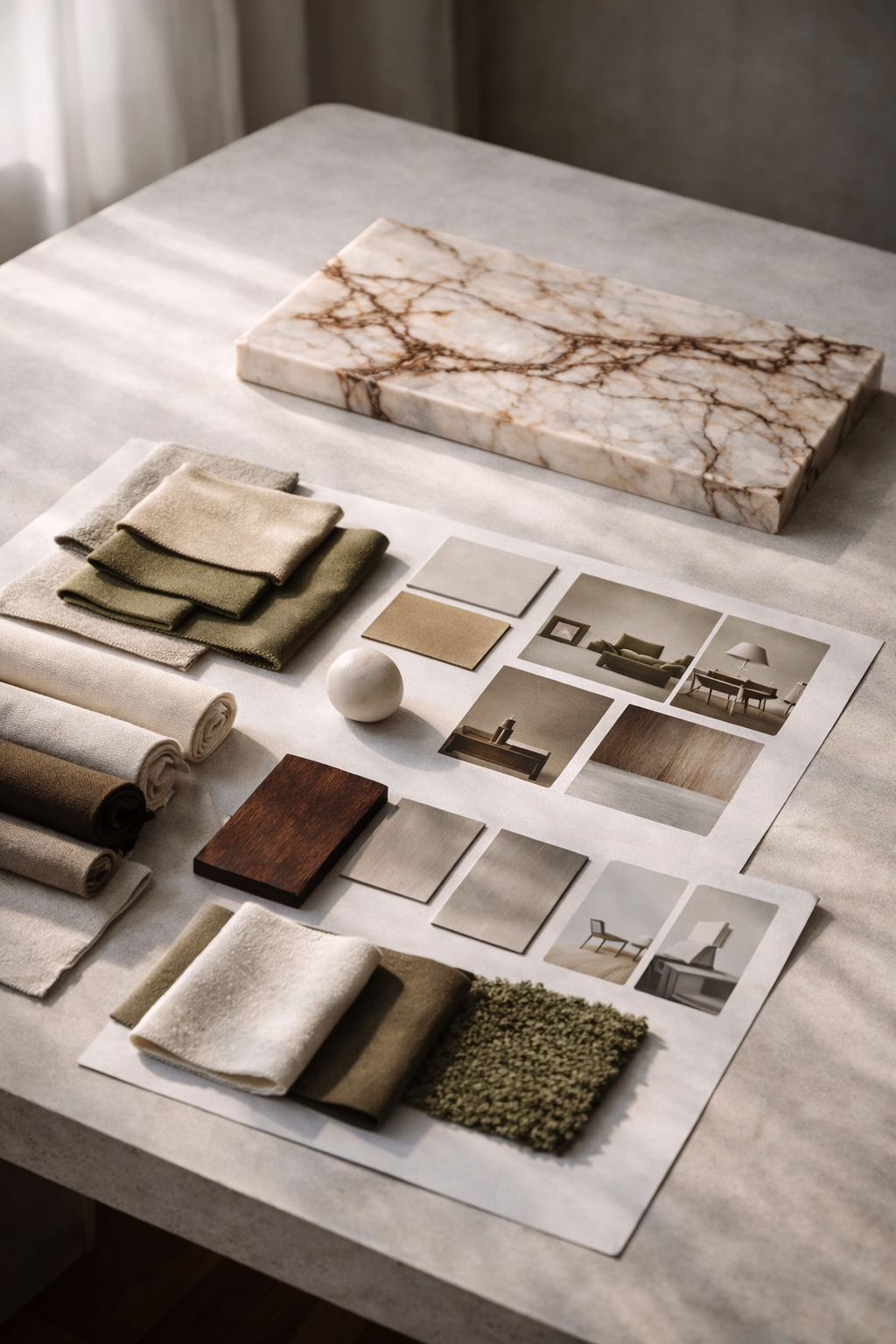
If you decide that your path is to start at the bottom of the ladder and work your way up, there is a lot to be said for finding a position in a studio, being willing and hard working, and learning on the job. Offering your time for free (asking to sit and observe rather than looking for temp positions), or taking your first steps in an adjacent field like fabric and furniture retail, can all help you to get a foot in the door if you don’t have formal training.
Gaining experience in a studio before starting your own is invaluable, particularly within commercial practices which expose you to a range of smaller and larger, residential and commercial projects. The additional skills you need, which include business management, navigating clients and staff, leaglities, fees, invoices and payments will all be informed by your time working for someone else.
Then comes the big question; when you have your own studio, what do you want to say through your work? The most successful designers are able to answer this question with clarity and have figured out how to distill their voice into a laser focused vision. They’ve found their niche. They aren’t concerned with trends, what’s happening on social media, or what their neighbour is doing. To be a great designer, you have to begin the journey of understanding who you are and how to create from a place of absolute authenticity.
3.How Do I GO ABOUT choosING colourS FOR MY HOME?
The way to set about doing this is to think about your entire home holistically. Even if you are only painting one room, map out in your mind a plan to create a palette for the entire home. Colours are most effective when they function together, either to create tension, or harmony.
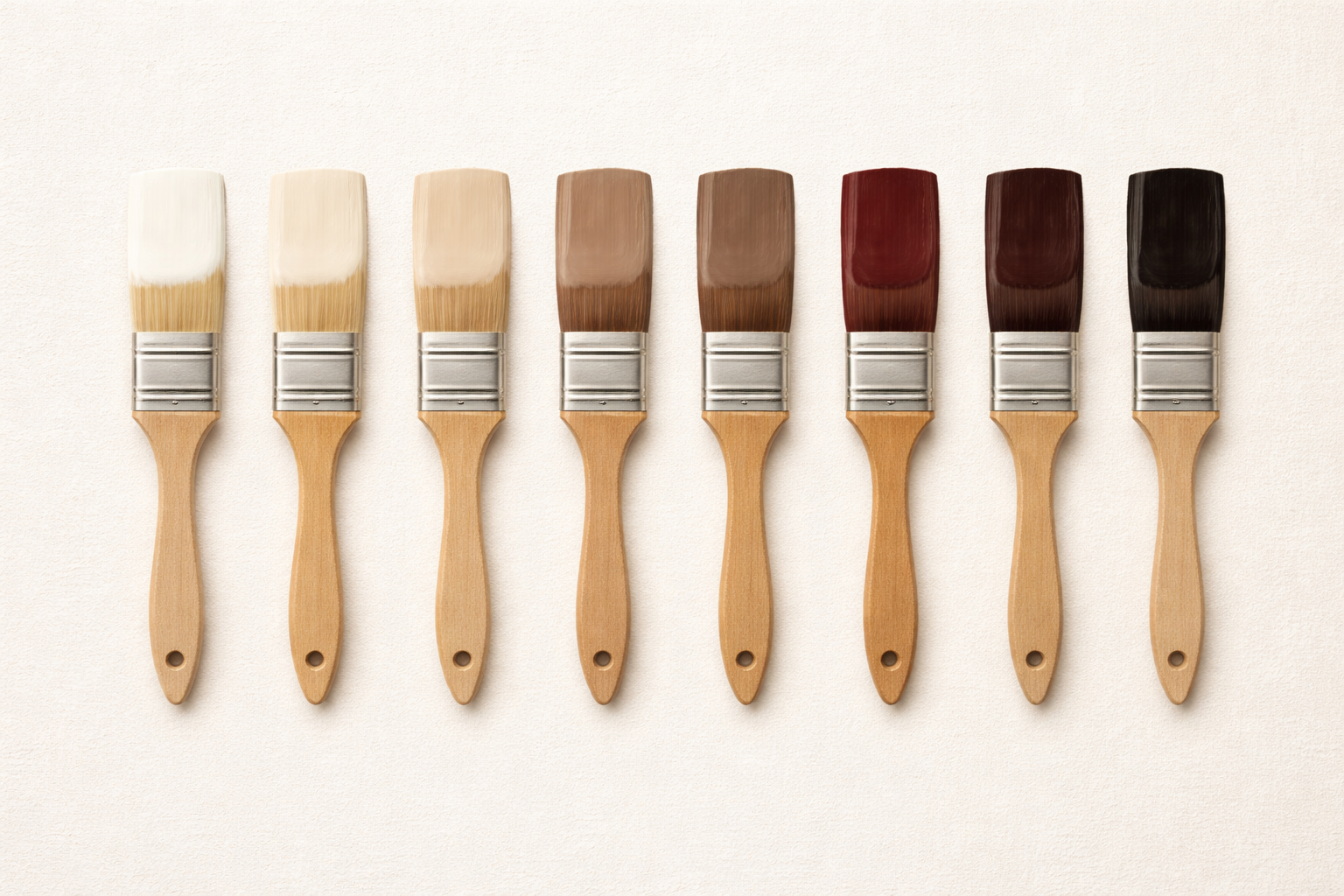
Start by thinking about whether you want a cool or warm palette. The tone at the base of each colour will either be cool, or warm. For example, under the umbrella of the colour green, you have cool, blue based greens like seafoam, teal or pine, and you have warm, yellow based greens, like olive, moss or chartreuse.
Next, using colour cards from paint companies, lead your eye to where it naturally wants to fall. Start here and build a series of colours tonally around your chosen colour. You want to reach the point where you have a spectrum of colours from neutral to darker, all within the same range of that first colour.
Next, add in a couple of opposing or saturated colours to make the palette pop. You’ll be able to determine if they clash uncomfortably, not necessarily because they are opposing, but because the base will either be too cool or too warm.
Once you have a grouping of colours, think about where to best implement them throughout the entire home. Do any of the colours invigorate you, or relax you? Does your chosen palette reflect your personality and is it made up of colours you naturally gravitate towards? Look in your wardrobe and see what colours you wear, this will be a good indication of the kind of palette you enjoy. The goal is to end up with a tonal range of colours with a couple of stronger options if you lean towards bolder interiors. Over time, work towards implementing this palette throughout the house, and don’t be swayed by new trends that come and go. Hold tight to your plan.
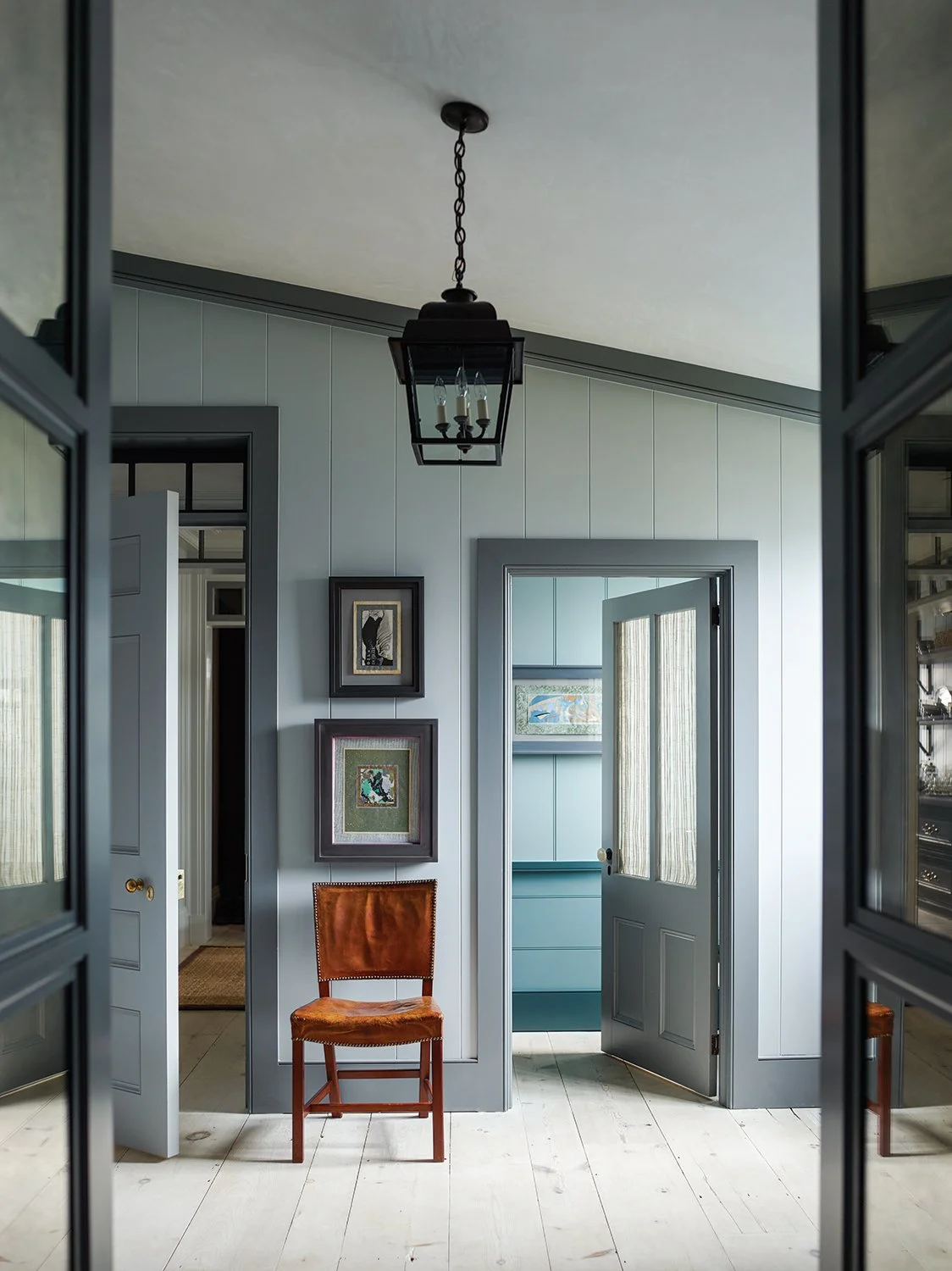
A design by Steven Gambrel which implements a tonal selection of cool blues and off whites
There is a tendency for people to feel that they have to make a big statement with colour, driven by the fear of playing it too safe. My advice is to throw this notion out of the window. Feel confident in only bringing colour into the home if it feels right within the overall palette you’ve created, and if it speaks to the room, its purpose and your character. Don’t feel the need to add it in just for the sake of it. There are many neutral colours that are still a colour. A vivid statement colour will feel uncomfortable unless it works within the overall scheme.
My final piece of advice is to avoid the misconception that a room needs good natural light, or must be large, in order to be painted dark. The amount of light that enters the room is what it is. It won’t fundamentally change just because you choose a pale colour for the walls. The risk is ending up with the same lifeless room, only now painted in a forgettable palette. Dark colours in a small room can look incredible, especially if you paint the ceiling to match and add texture to the walls in the form of joinery, panelling, coving and moulding details. Light won’t bounce around in the same way, so by adding texture, you create contrast, shadow and highlights, which is essential in making a dark colour work.
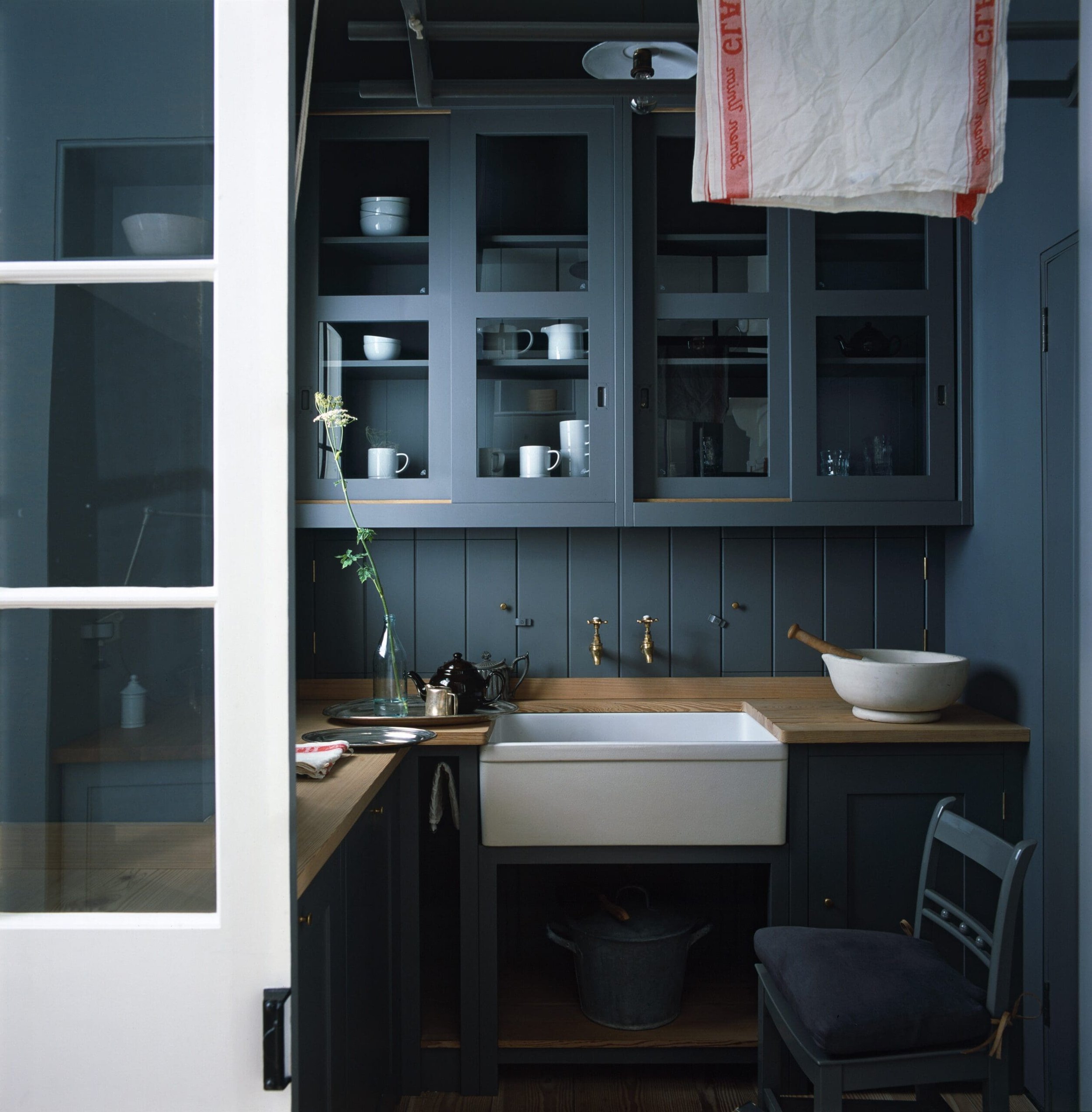
A perfectly designed scullery from Plain English Kitchens, proving that dark colours in small spaces can be very effective. The tongue-and-groove wainscotting , joinery and glazing adds texture to the walls, creating contrast within the room.
4.How DO I MAKE A ROOM LAYOUT
Consider the overall layout of a room before buying any piece of furniture. Whether a single piece, or a full new room layout, work through my approach below to achieve the best results.
1. MAKE A PLAN
Measure the entire room and it onto squared graph paper. This is the best way to create scale drawings if you aren’t using a scale ruler, or dedicated software. Keep it simple; one square on the page represents 10 cm. Work to round measurements so that you’re not making it hard for yourself. Add in the positioning of architectural details like doors, windows, fireplaces. radiators or pillars to scale.
2. CHOOSE A FOCAL POINT
Every room requires a focal point, whether its an architectural feature, a piece of art, furniture, or an arranged grouping. A focal point is most effective when supported by symmetry, either centred on a wall, positioned within the room, or aligned with architectural elements such as windows, doors, wall recesses, projections or ceiling lines.
3. ADD FURNITURE & PLAN A TRAFFIC FLOW
Add key pieces of furniture to your plan using scaled dimensions. If you’re a little off, it’s not the end of the world, you just need to understand whether the furniture feels in proportion with the overall dimensions of the room. As a general rule of thumb, larger furniture is better than smaller, which can look mean and uninviting. That said, think about the traffic flow. Research the amount of space you need between, behind and in front of pieces, especially for those which are likely to be moved around, like dining chairs. Key pieces of furniture should provide you with comfortable seating/sleeping, surfaces for placing everyday items like glassware and books, and a space for working or carrying out functional tasks.
Next, add all of the additional furniture which adds character; side tables, supplementary seating, stools, sculpture, and locations for artworks. The biggest mistake I see is people leaving too much negative space in a room. If you can, bring the furniture into the centre of the room, so everything isn’t hugging walls and create break off zoned areas, like a small games table with two chairs. When you have finished your final layout, challenge yourself to add a few additional smaller items to the plan. A room always looks better when layered. Even in a modern, minimalist room, introduce a few more pieces, just keep the lines clean and sleek.
4. MAP OUT LIGHTING
This should be designed and implemented in three categories: general/working light, ambient light and task lighting. General lighting includes chandeliers, pendants, recessed and track lighting. Much like the furniture, lean towards larger pendants, rather than smaller. An oversized light fixture will always look better than something that is too small for the space. Next, draw on your plan where wall lighting and lamps will be positioned. Ambient lighting is the most important category because its more atmospheric and relaxing than overhead lighting. It’s easier to live with day to day. If you can’t channel into the walls, research wall lighting which can be plugged in or is rechargeable. Lastly, task lighting is for areas where you might want to carry out a specific task. Plan for it with a lamp, or direct light source. Picture lights also fall into this category and are a great way to highlight loved pieces. Map out where any leads will be plugged in, so you don’t end up with loose wires or extension bars on display and put dimmers on all switches, so the light can be controlled.
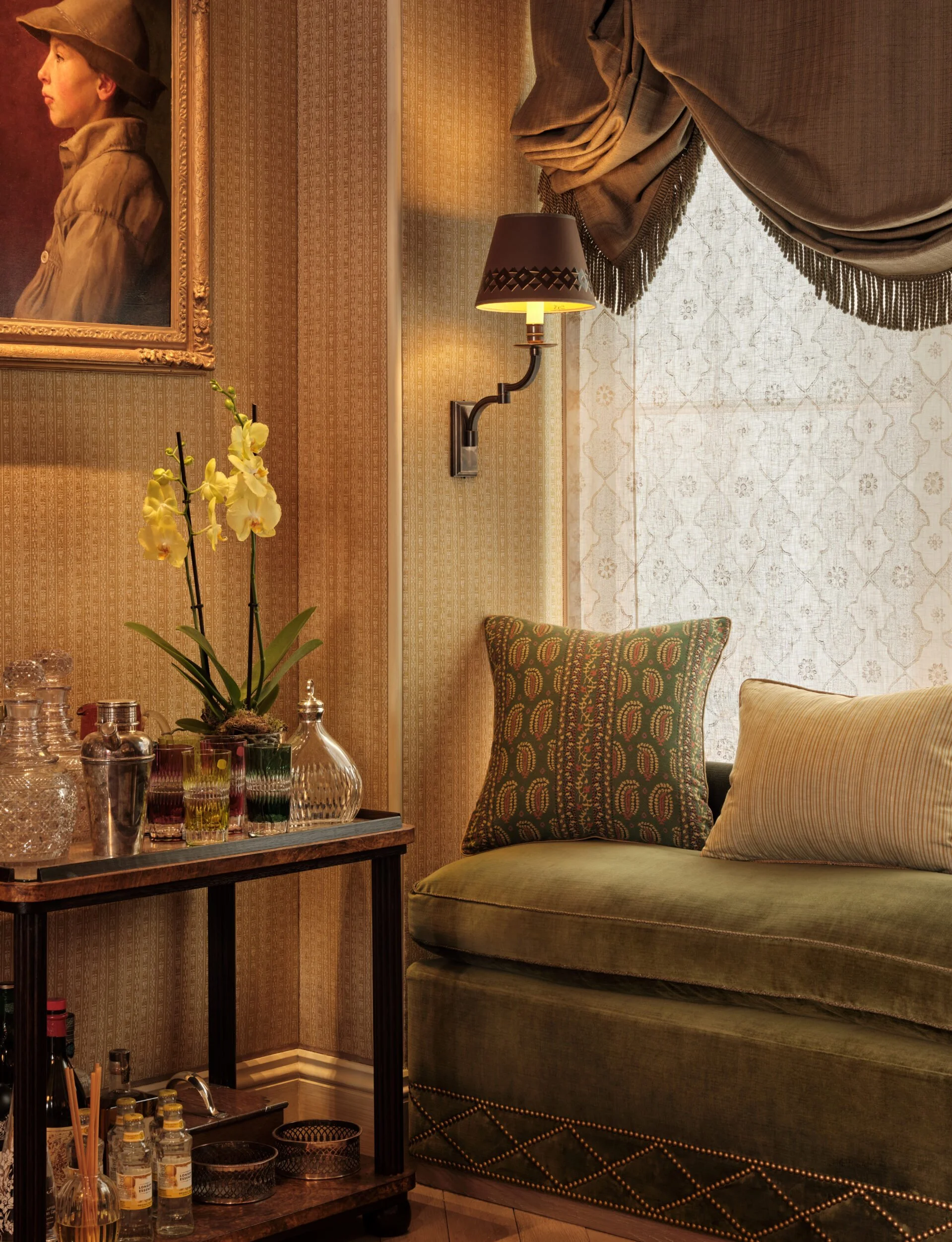
The Tissus d’Hélène Drawing Room by Guy Goodfellow (2025 Wow House). Task lighting illuminates a bench for reading.
Photography by Astrid Templier. Lighting by John Cullen
5. BALANCE THE ROOM
It is important to think about the layout in a three dimensional way. Aim for groupings to have the same seat height and add pieces which create levels in the room, like bookcases, taller lamps, sculpture and drapes. Also aim for a mixture of furniture pieces with legs, solid and skirted bases.
6. DETERMINE THE RUG SIZE
Anchor all of the pieces we’ve talked about with a rug that falls outside of the edges of the furniture, collecting them into a group which sits on the rug. If you have zoned areas, include multiple rugs which each capture the furniture sitting on them. If you wish, you can then double rug with a smaller piece.
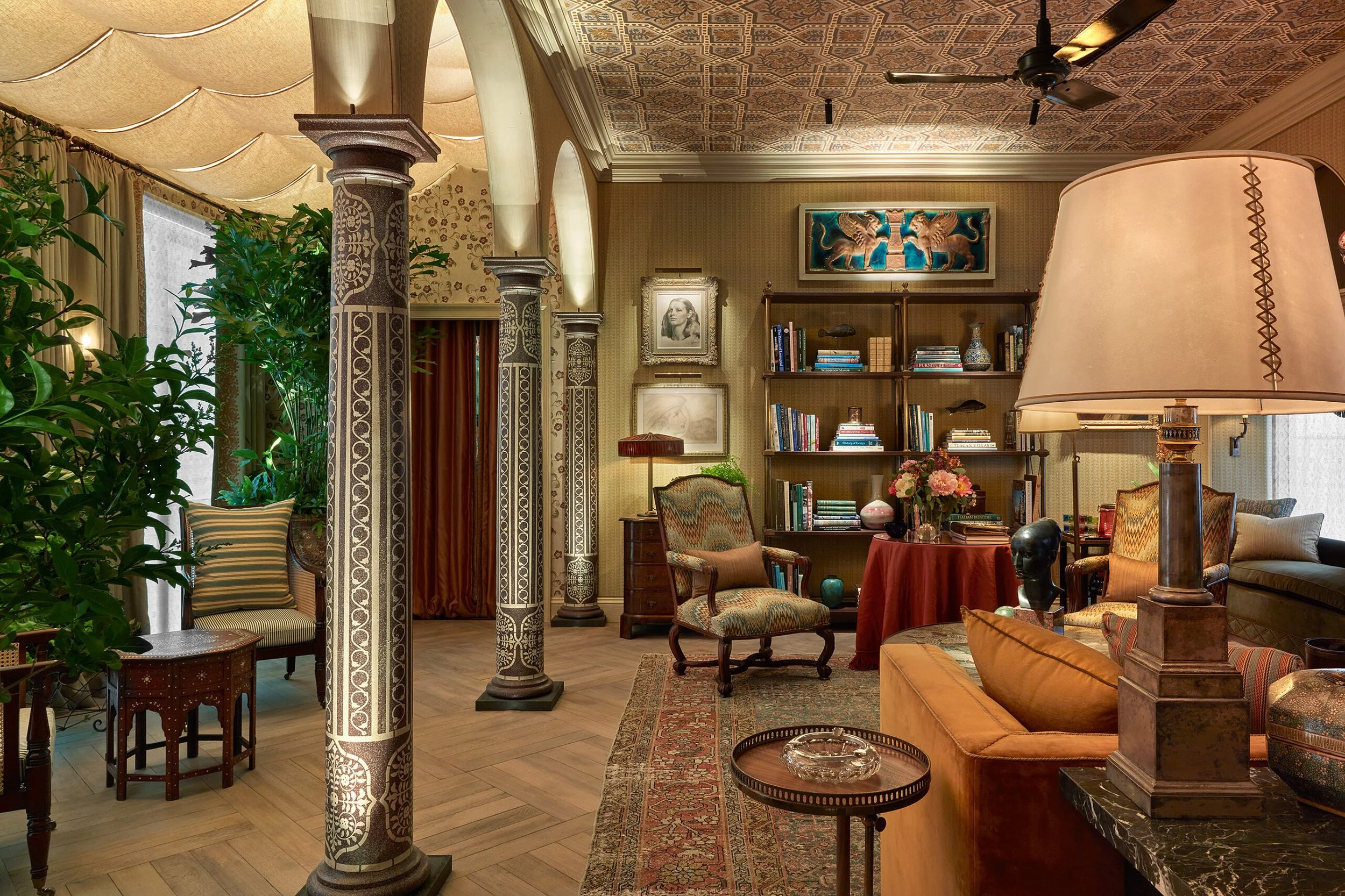
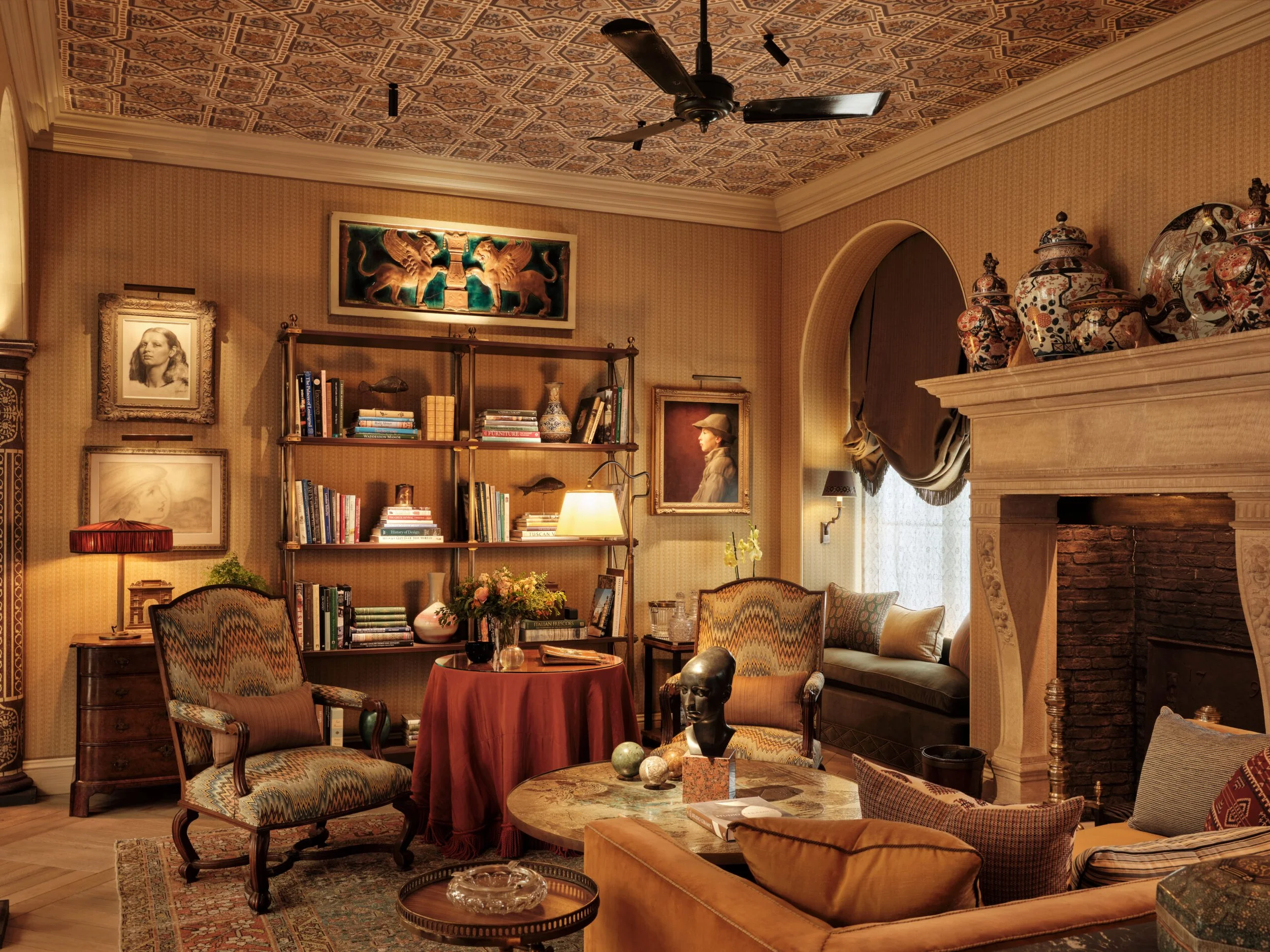
The Tissus d’Hélène Drawing Room by Guy Goodfellow (2025 Wow House) has created a focal point with a fireplace, balancing the pillars while creating zoned areas for seating with layers of furniture and decor.
Photography by Astrid Templier. Lighting by John Cullen
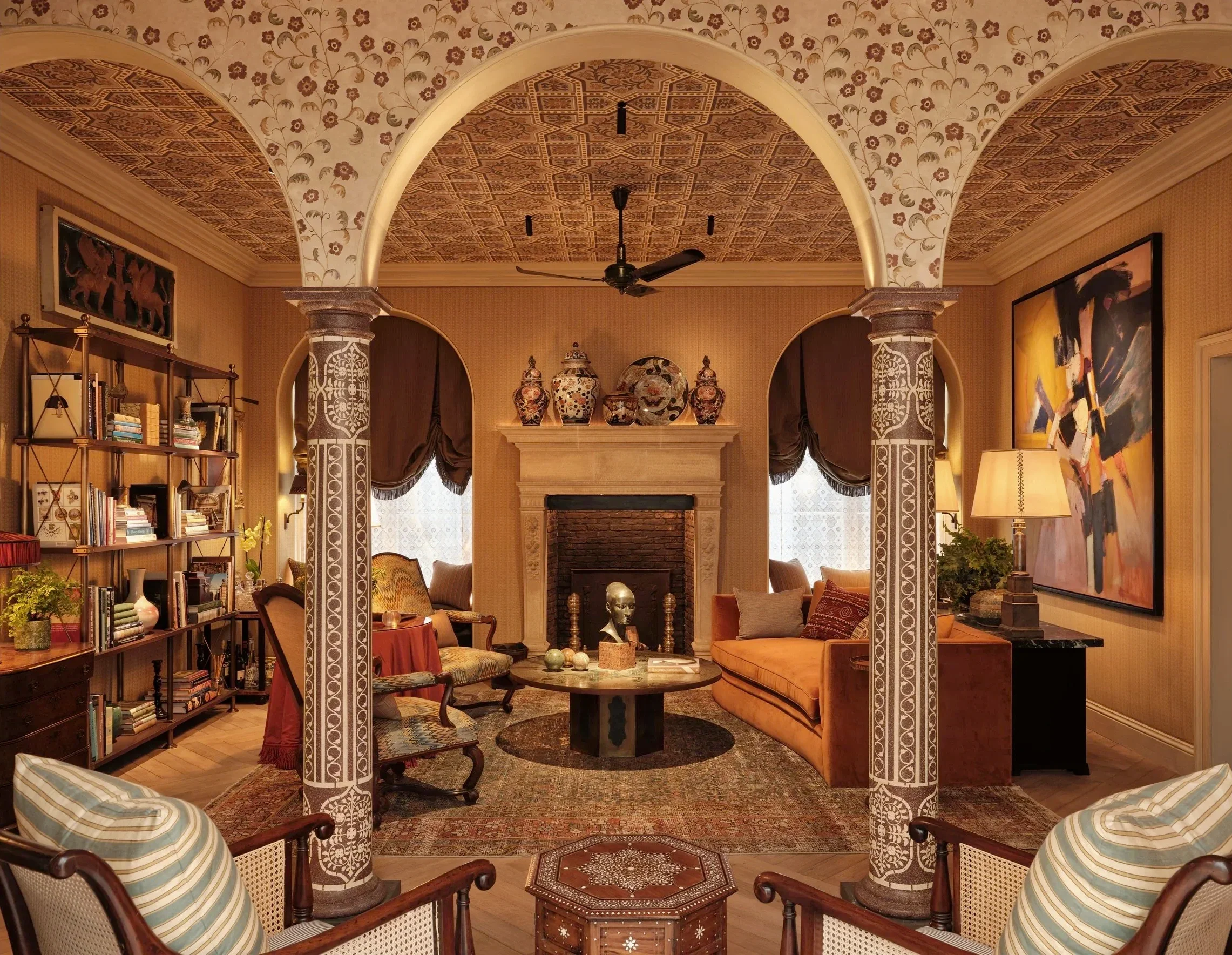
The Tissus d’Hélène Drawing Room by Guy Goodfellow (2025 Wow House). Lamps, arches, bookshelves and artworks draw the eye up through the room.
5.Who IS your favorite designer?
There are so many incredible designers I look up to, here are just a few.
THOMAS O’BRIEN
Founder of Aero Studios, Thomas O’Brien, creates elegant interiors with a mix of Americana and European sensibilities. Defined by a relaxed, layered approach that blends antiques, original designs, and collections of decor, art and textiles. His coffee table book ‘Library House’ is one I go back to time an again for inspiration.
@aerostudios
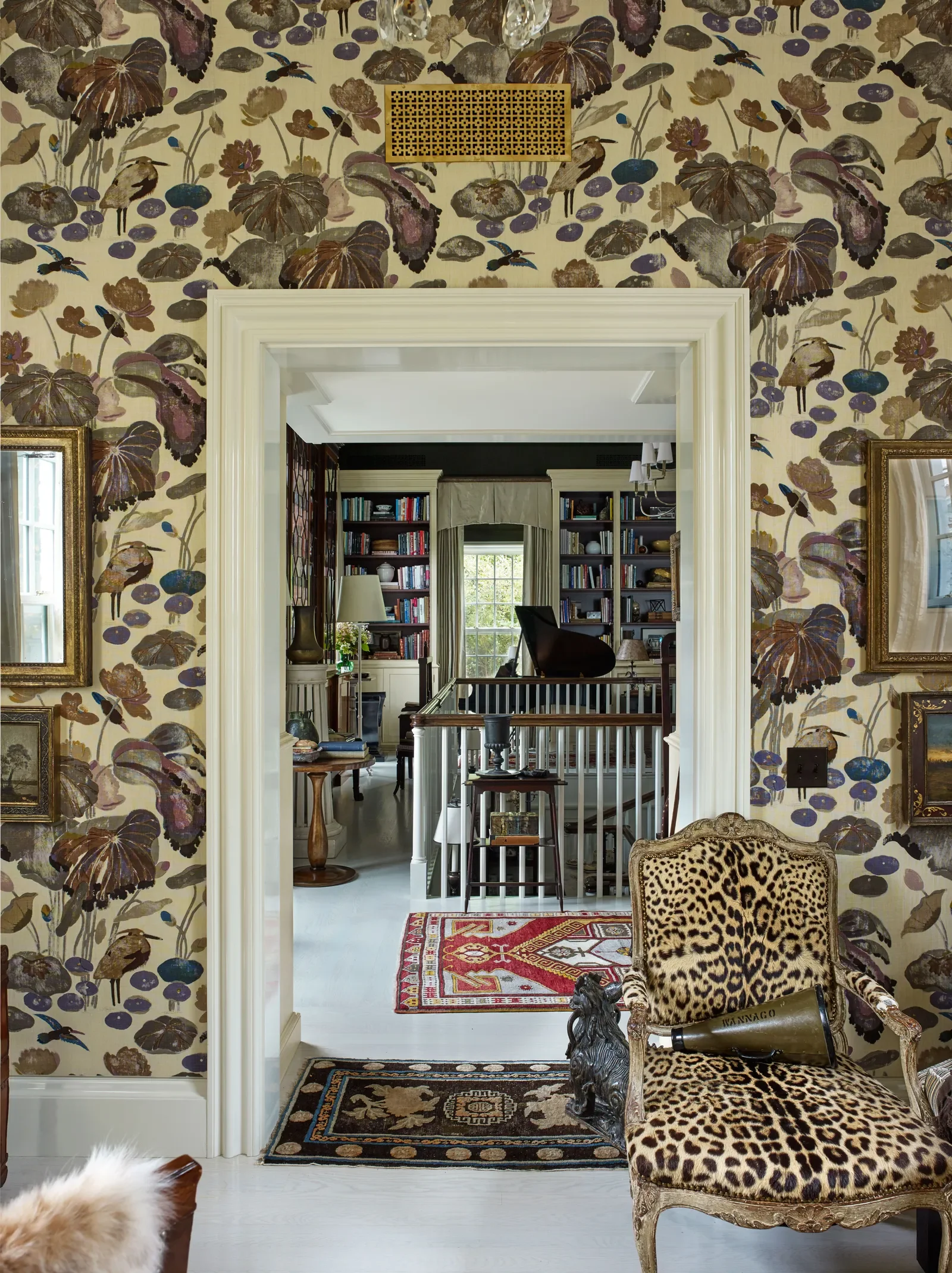
Design by Thomas O’Brien. Photographer Unknown
STUDIO PEREGALLI
Laura Sartori Rimini and Roberto Peregalli create interiors that reinterpret classical deisgn, bringing a fresh twist to historic and heritage rooms. Their spaces celebrate aged patinas, ornate details and trims, rich fabrics and textured wall finishes to create rooms which are steeped in atmosphere and full of show stopping moments.
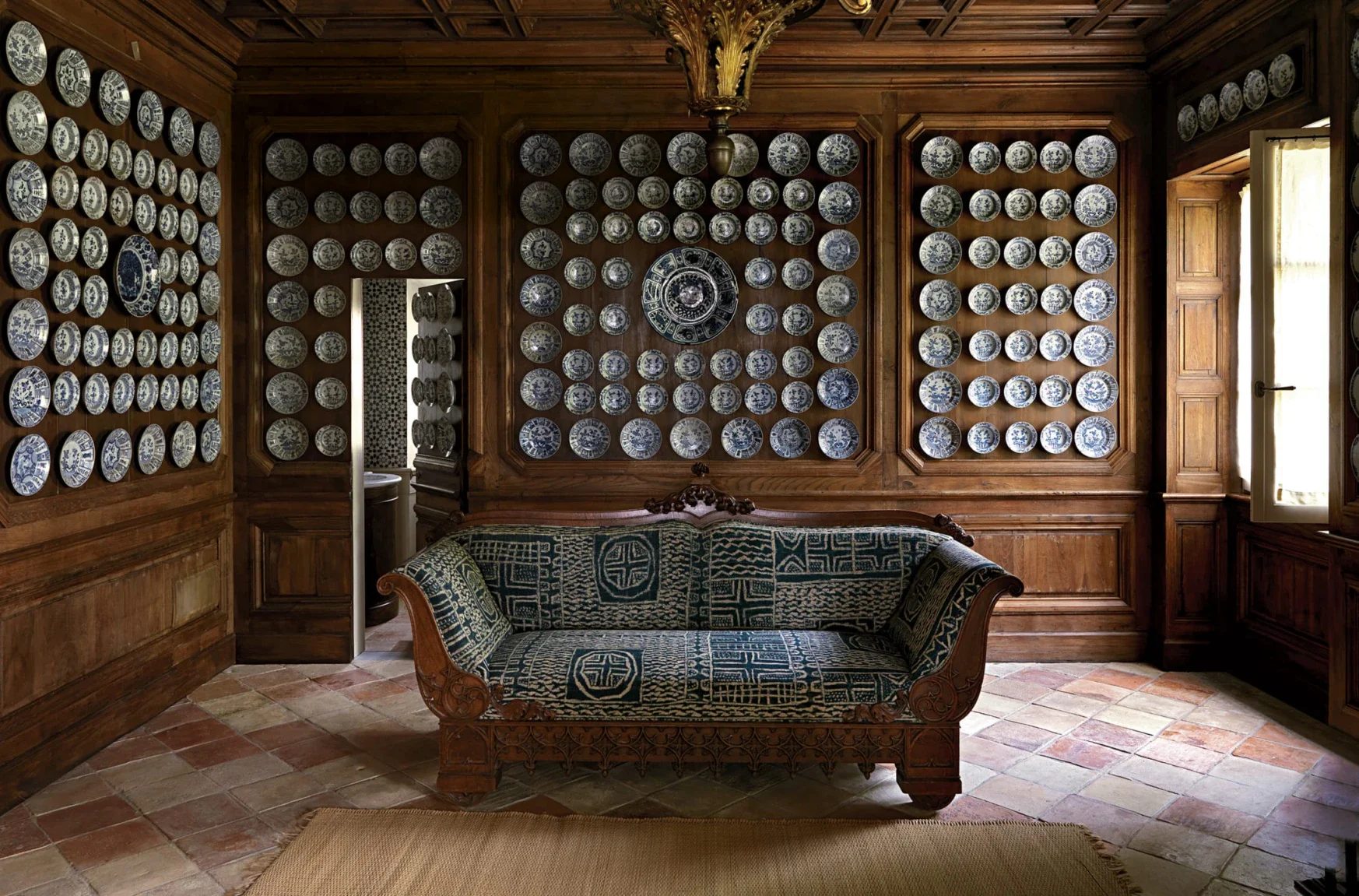
In Sotogrande, Spain, Laura Sartori Rimini and Roberto Peregalli, created a dramatic display with hundreds of pieces of Chinese export porcelain. Photograph: Massimo Listri
DAN FINK STUDIO
Interior designer Dan Fink draws heavily on Art Deco influences, translating them into spaces which feel both timeless and distinctly modern. His work is defined by clean lines, sleek forms, and a highly disciplined sense of restraint, creating a quietly sensual aesthetic, that feels grown-up and elegant.
@dankfinkstudio
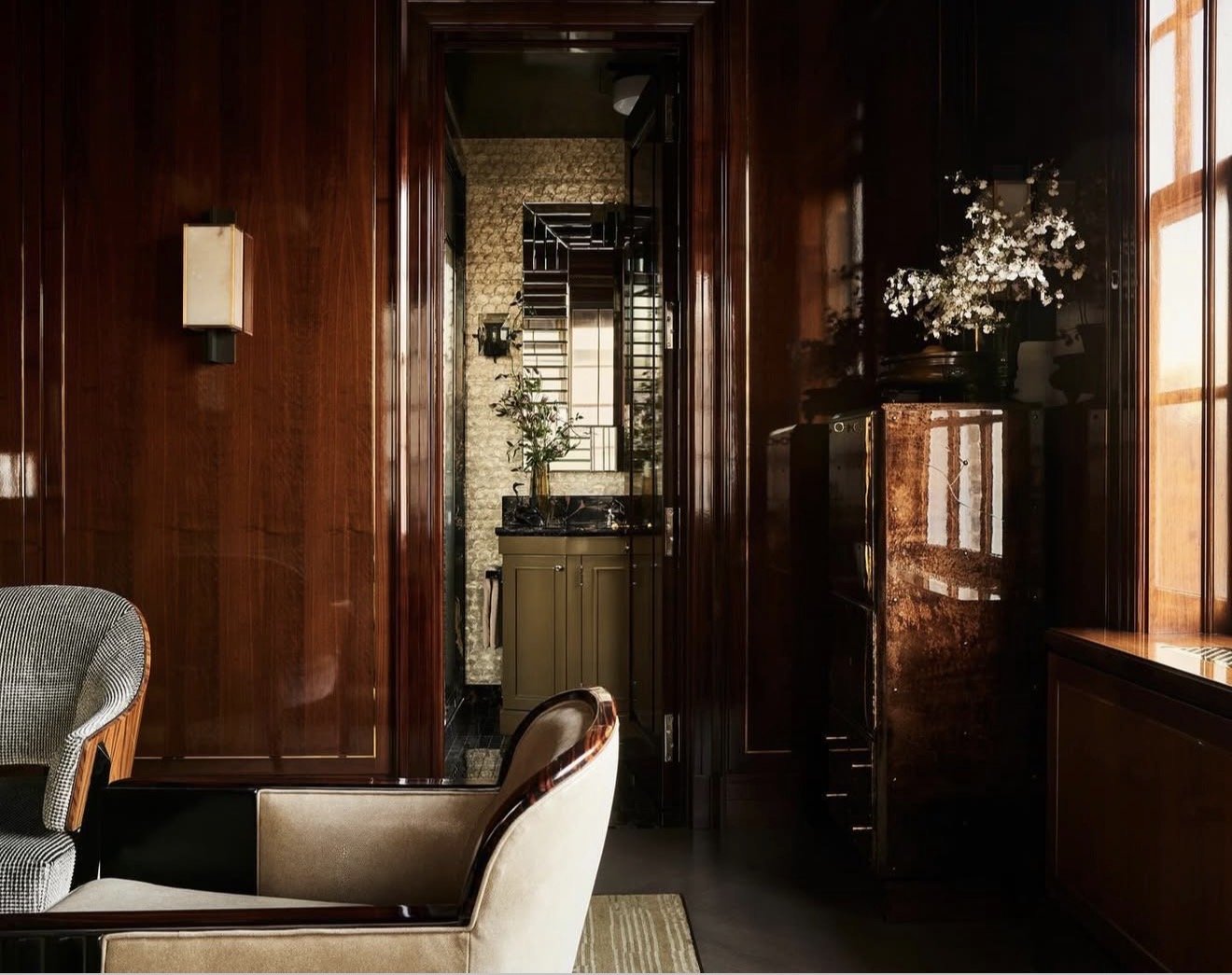
Design by Dank Fink Studios. Photography by Nicole Franzen.
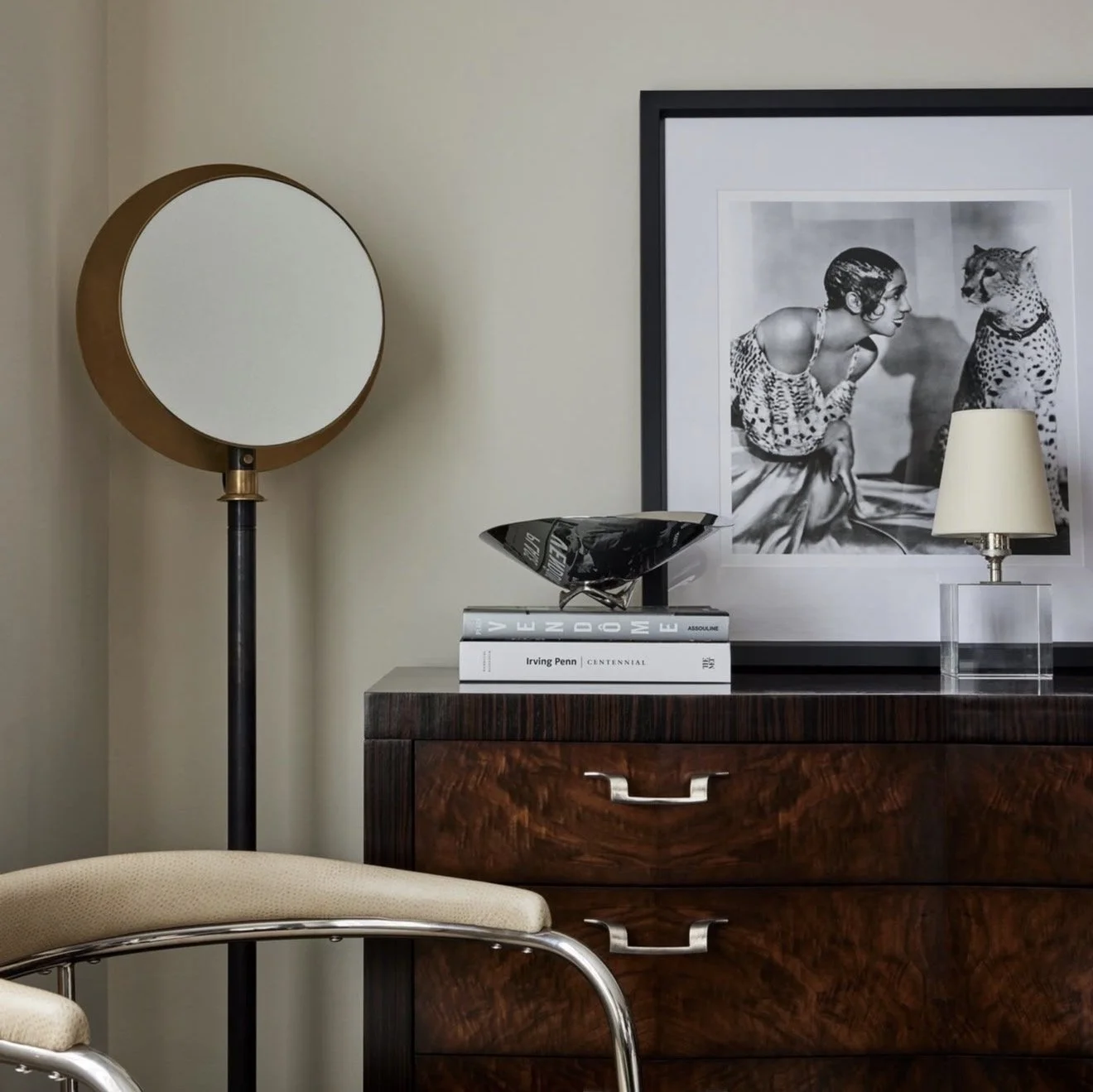
Design by Dank Fink Studios. Via @dankfinkstudio
RENZO MONGIARDINO
Born in Genoa in 1916, Mongiardino was an Italian architect and interior designer. Amongst his signature recurring features are false doors, visual trickery and plays on perspective, trompe l'oeil, frescoes imitating marble and fabrics imitating frescoes. Entering a room designed by Mongiardino feels like a treasure hunt, an aesthetic experience unlike any other.
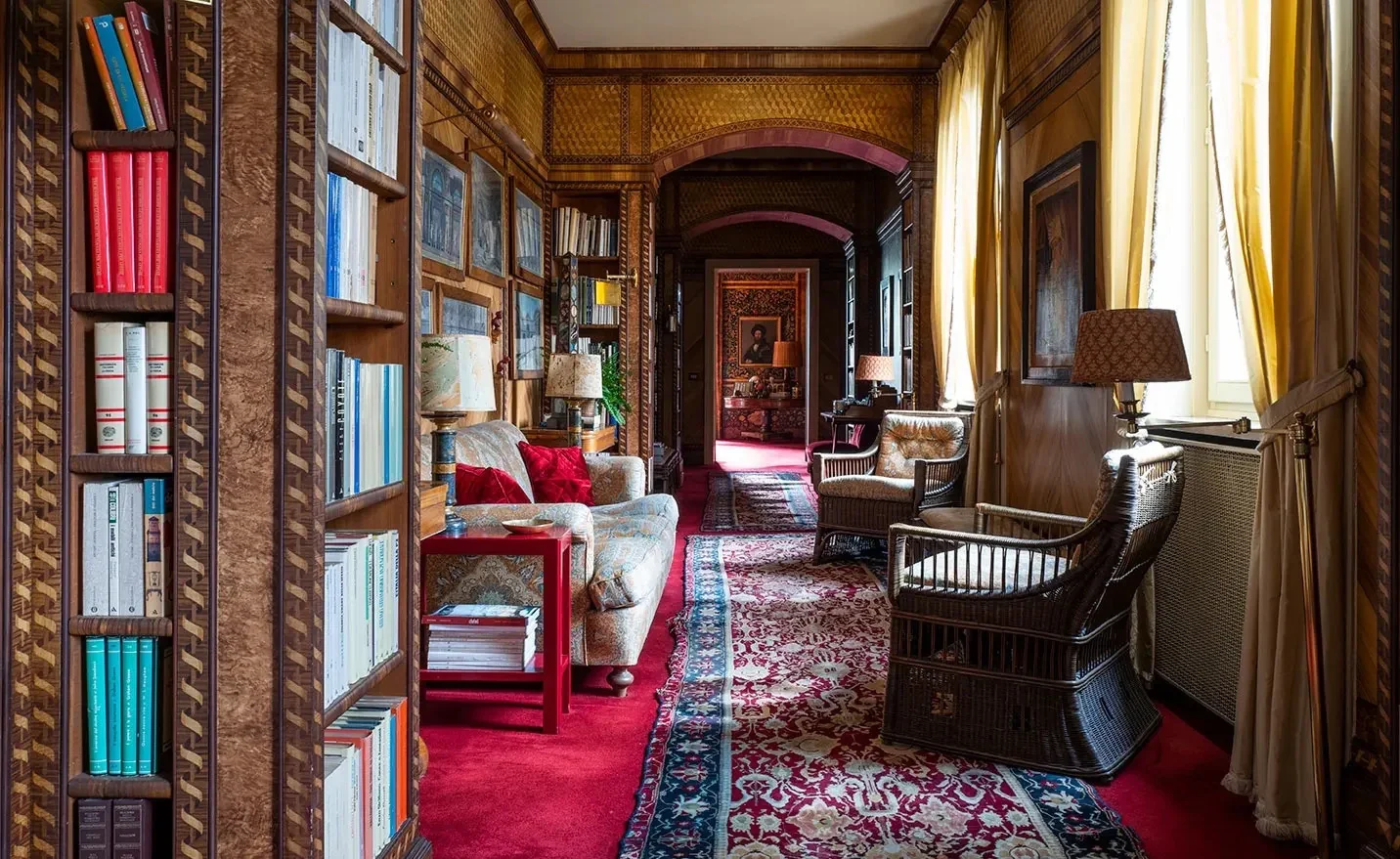
Casa Cabana in Milan, the childhood home of Martina Mondadori. Photographed by
RALPH LAUREN
I have always held a deep respect and admiration for Ralph Lauren. His ability to create a complete lifestyle, rich with storytelling and imagination, has been a constant source of inspiration for me. As a designer, I deeply admire his unwavering purity of vision, and the integrity he brings to everything he creates.
Beyond his work, I am equally inspired by the way he carries himself with grace, authenticity, and humility. It’s that combination of creative brilliance and personal character that makes me truly love and look up to him.
@ralphlaurenhome
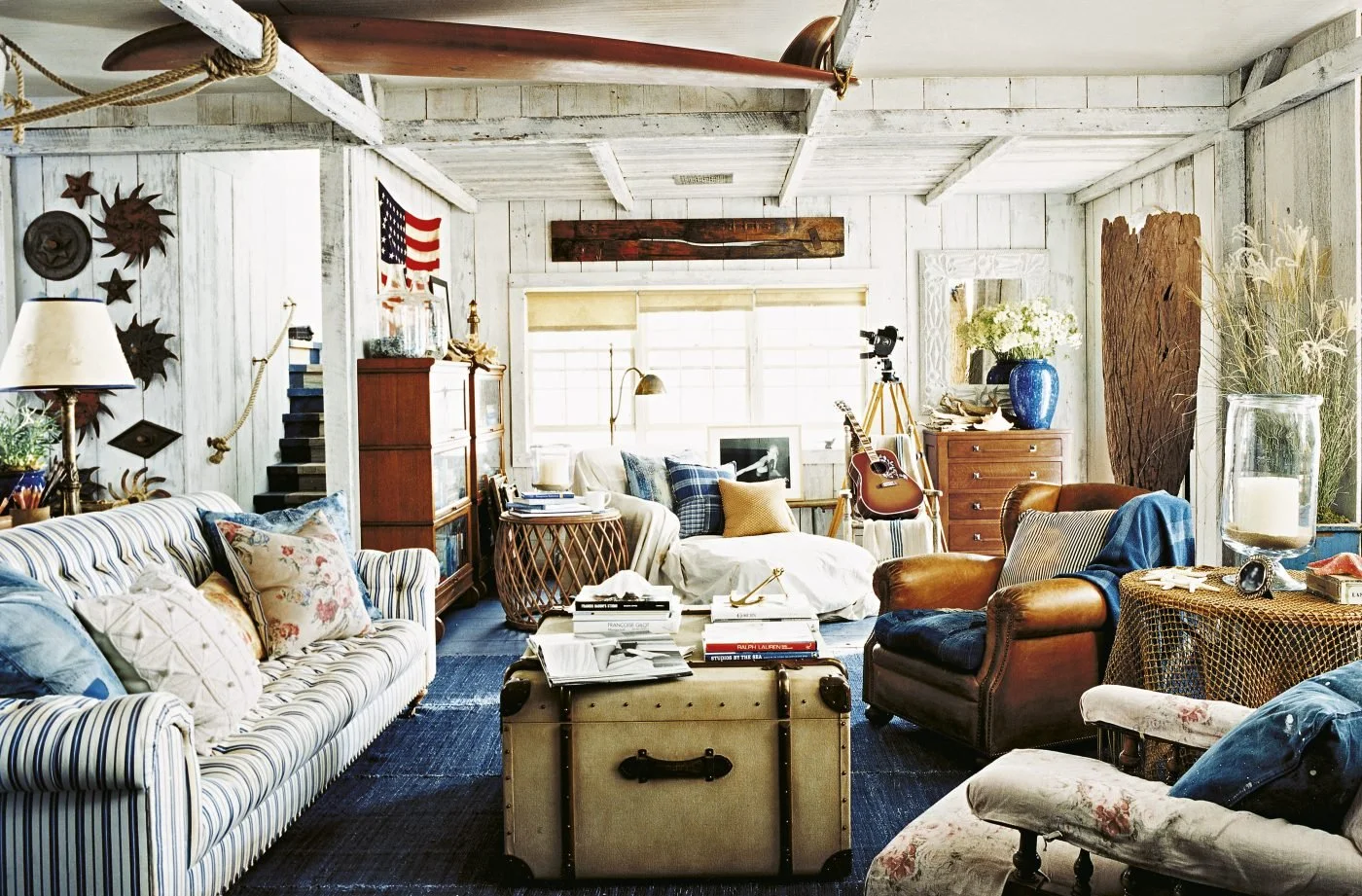
The 2007 Hither Hills Studio collection. Photography by François Halard.
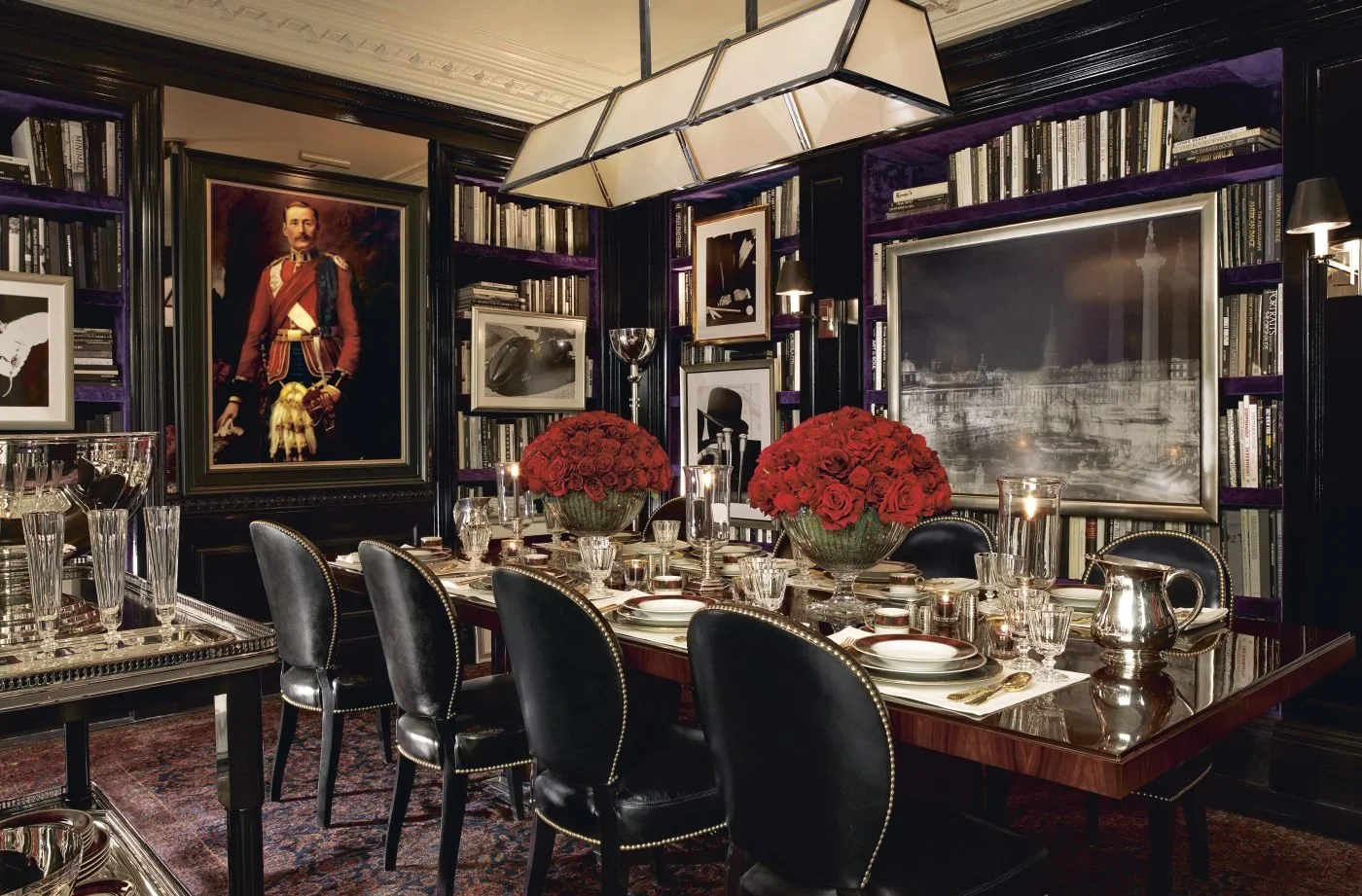
Fall 2013, No. One Collection from Ralph Lauren Home.